
The big companies adopting an ancient art to win customers

In 2026 there is something more valuable than gold. More valuable than rare earth metals. More valuable even than goddamned printer ink.
That thing? Attention.
In a world where technology proliferates and brands market to us with relentless, energy-sapping enthusiasm, attention has become painfully scarce.
But if you can get your customers' attention and - holy of holies - turn that attention into trust, the rewards are huge.
That's why the world's biggest brands are racing to rediscover an ancient craft - one powerful enough to cut through the noise and actually make people care.
That craft? Storytelling.
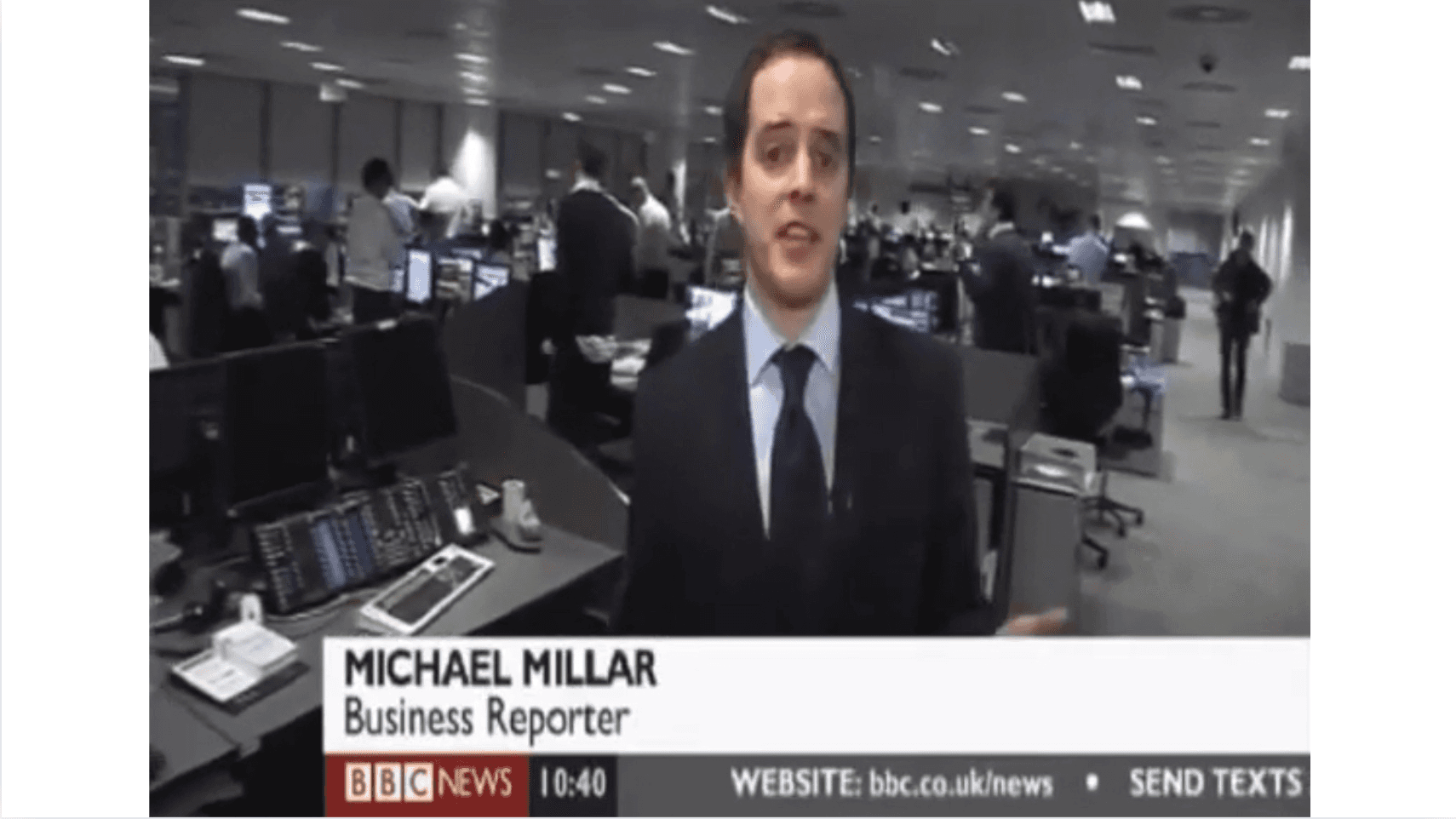 The author, telling stories back in the day
'Desperately seeking…'
The Wall Street Journal recently proclaimed big US companies Are Desperately Seeking 'Storytellers'.
To cut a long story short, this is because they've realised that in such a noisy world, emotionally-engaging stories (that aren't thinly disguised clickbait or sales pitches) are what people want. What they need.
It's great stories that enable brands to build familiarity, trust and loyalty in a world of confusion and disillusionment. That enable you to engage. To connect.
To create a sense of belonging in a world too long focused on "technology gurus, developer ninjas, & SEO rockstars", to quote the WSJ.
Yes, it turns out that the way humans have built trust, loyalty, and all that good stuff over millennia are still what people crave.
Funny that.
But let's be clear: most firms are RUBBISH at storytelling.
Which means if you can get it right, the prizes are yours for the taking.
Here's how you do it (and, if you're really keen / cynical, why it works, right down to a neurological level.)
Once upon a time
First, it's worth understanding what underpins all this (outside of the exhausting ad bombardment we all get every day).
If I were to sum it up in a single question, it would be:
"Would you ask someone to marry you on the first date?"
Probably not.
The same goes for your customers (although this rule applies equally well to investors, suppliers, and any number of other stakeholders).
If you want to win them over and build a lasting relationship, you first need to build awareness, understanding, and trust in your brand.
And while no one will accept your marriage proposal straight away (sorry about that), a strong brand delivers an audience that will engage with you, do business with you, and even become your ambassadors.
Then they're in it for the long haul.
People engage with brands (as opposed to simply products) for lots of reasons. These include:
- finding or reaching a desired state/status (often empowerment)
- the feeling they get from doing so
- the community they are joining
- a shared mission or set of beliefs
- …or a combination of the above
To make this connection with them you've got to tell great stories. Or, as advertising legend David Ogilvie put it:
'tell the truth but make it fascinating'
Or as another person put it, 'Start with the soul, not the sale'. (You won't be surprised to hear that there's no shortage of pithy one-liners in marketing circles).
Just to be clear…
Building a successful business means engaging with customers in many different ways; storytelling isn't a panacea.
To get folks through the digital (or, indeed, physical) door you'll still have to consider things like promotions, price, the right channels to reach the audience, how you talk about product benefits and features, the way you package everything up, and so on.
None of that is going away.
But that's marketing. That's the 'how'…. As in: 'How are we getting people into our (web)shops filled with the desire to snap up our product or service?'
Storytelling forms a key part of that, but the whole thing will be a damn sight easier if you've laid the groundwork already.
I'm talking about establishing your brand: the 'why'… As in: 'Why are people going to want to associate themselves, work with, and buy from a company like ours?'
All you need is love
Your brand is what gets you leverage in a competitive industry and positive recognition among customers.
"Your brand is what people say about you when you are not in the room"
Jeff Bezos, Executive Chairman, Amazon
If you take time to work on your brand (rather than simply pushing the benefits and features of your products), you will create deep and meaningful relationships – ones where customers understand you, trust you, and learn to love you.
A great brand consistently offers customers an experience that is:
- Valuable
- Relevant
- Differentiated (from your rivals)
- Trustworthy
That is what will keep them coming back for more. And a key vehicle to deliver it all is great stories.
Below, I've dived into some pretty deep psychological reasons - even neurological (eek) - why this all works, as well as where you might source your own stories.
But let's get to the meat of things first: how do you tell a great story?
7 rules for great storytelling
Here are some rules to make sure you get your storytelling right.
And, let's be honest, they are the same as they were when we did this around campfires outside our caves:
- Communicate with a defined audience. ONE SIZE NEVER FITS ALL. A RISING TIDE DOES NOT LIFT ALL BOATS. Being all things to all people just results in bland stories
- Tell stories that entertain, educate, inform, and/or inspire. Make sure you put these goals before saying 'Look at me, I'm great!' (I recommend the 80/20 rule, where you aim to spend 80% of the time helping people out with your expertise, insight, or even hilarious anecdotes, and 20% overtly demonstrating the benefits of you service.)
- If you are talking about your products and services ALWAYS put benefits before features… no one cares about your shiny thing until they know what's in it for them
- Tell stories that your audience will find topical/timely, relevant and unusual. Inject conflict wherever you can, and put human experiences at their core
- Tell your stories in a consistent, authentic way that builds commonality (i.e. a sense of belonging / community)
- Define how are you going to talk to your audience(s) and talk that way consistently (i.e. What tone of voice are you going to use? How technical or in-depth will you go? FYI: always prioritise clarity over flare)
- Keep the audience engaged by adding lots of hooks as you go. (Hooks include strong statements, questions, interesting facts and stats, metaphors, quotes, personal anecdotes, etc.)
Lessons from Hollywood
To ensure you stay focused, look at your story and ask:
- Does it value to your target audience? (Where their interests and yours intersect is that sweet spot)
- Is this something they actually want to see / hear / read about (in the context of what you do)?
- Does it position you as a voice of authority? (Be careful of straying into places you don't belong)
- Does it contain the key messages you want to get across about your brand, its vision, and it values? (These don't need to be explicit, your stories can be a reflection of them)
- Are you reaching your audiences in the places they hang out, both digitally and in the real world? (That'll shape the formats & channels you use to communicate with them)
And, if you need a ready-made structure to help shape your stories, you could do worse than adopt Pixar's approach.
The famous animator uses a very simple structure to begin writing all their films (my thoughts on what each step means are in brackets):
- Once upon a time… [someone or something existed or came into being]
- Every day… [something happened that was the norm / drove them on / etc.]
- One day… [someone or something changed / took a big decision / etc.]
- Because of that… [there were certain consequences]
- Because of that… [someone or something had to take action]
- Until finally… [the situation is resolved, lessons are learned, and a new paradigm adopted]
If you can follow these rules then you will tell stories that will give people an engaging insight into your brand, what it does, and what it stands for… and, most importantly, what that means for them.
Trust me, it won't take long for your customers to thank and reward you for it.
 An inspiring, vaguely primeval image to get your creative juices flowing
Where are your stories?
It's really easy to think 'I don't have any stories to tell'.
Everybody has stories to tell. Don't for one second think you don't.
Your stories could come from all sorts of places. Here are some ideas to get you started:
- Your take on the news, trends, or other people's stories (which is what inspired this article)
- Your origin story (and what that tells the reader/viewer/listener about your vision, mission and values)
- Your inspirations (what or who or where inspired you to make major decisions, for example)
- Your employees' stories (from inside and outside of work, as long as they relate in some way to the firm and its mission)
- Your work in the community or with other third parties, and why you/they are doing it
- Customer case studies (how did your firm or its products make a difference to their lives?)
I'll have a pint, please
And don't shy away from telling the rough alongside the smooth. Audiences crave authenticity and transparency. (If there's humour in there - even at your own misfortune - then you get bonus points).
We love hearing about people who struggle and overcome the odds because it gives us someone to root for. That's why trouble or tension is a part of all the best stories.
If you can't work out how to tell your story, you can always fall back on the Pub Test.
Ask yourself: how would I tell this story, about this thing, to my target audience down the pub?
A simple, but surprisingly effective way to tell engaging stories without getting all tied up in tedious corporate marketing guff.
Still here? Wow.
Well then, let's reward you with some real geekery.
Strap in tight…
3 reasons why good storytelling works
1. We are hardwired to engage with stories
We've been telling stories for thousands of years because they serve deep-rooted psychological needs.
People have the innate desire to learn about certain developments that might be relevant to them.
As humans we're on a constant quest for knowledge and stories help us satisfy the urge to learn and be entertained, and do so in a highly effective way.
Stories help us to connect and feel part of a group; they help us to make sense of things and trigger deep emotions such as happiness, sadness, anger, and joy.
They give us something to believe in. Don't we all need that right now?
"Storytelling is like a vitamin. When it gets into your readers, it permeates their whole being, and fights every objection that might otherwise stop them from becoming loyal customers."
2. Our brains just love it
Let's briefly dip our toes into neurophysiology…
Simply put, good stories make our brains light up. Studies show neural activity increases five-fold when we hear a good story.
When those neurons fire it triggers memory and that lets us retain more information. This is why people retain 70% of information through stories, but only 10% from data and statistics.
To put it simply: if you're a storyteller you'll be more memorable to customers.
That's not everything either…
Scientific tests show well-told stories trigger the chemical dopamine in our brain, which (again) helps aid memory creation (and, hence, brand recall).
They also trigger oxytocin, known as 'the love drug', stimulating deeply rooted, powerful emotions. If you do that then you're making customers care about you and helping them be better predisposed to you – on a neurological level.
And (no matter how rational we all think we are in the 21st century) these emotions then influence our decision-making… and much more often than we might think.
We make decisions based on emotions all the time – often without realising it – and justify them with logic afterwards.
It's no coincidence that when marketers present us with data, it is often wrapped up in a story (e.g. a case study).
These clever folk know that emotion means they get remembered. They know it's emotion that gets their stories – and hence their brand – shared …and it's emotion that opens wallets and purses.
3. Trust is a luxury item
Using a neat storytelling device, let's end where we started.
As we move further into the 21st Century, people are becoming more and more savvy and more cynical.
They won't tolerate the hard sell and, as I've already mentioned, they will get pretty put out if you try to marry them on the first date.
The information overload is making us more distrusting than ever. That's why there's such a drive for businesses to present themselves as honest, authentic and transparent.
Many firms are now waking up to the fact that consumers want even more than that: we want commonality.
We want our brands to understand and relate to us.
So it's hardly surprising that marketers have moved towards appealing to emotions, rather than bombarding their audiences with self-promotional tactics.
This is as true in the traditionally more staid world of B2B, as it is in B2C.
Research by Google found:
- 50% of B2B buyers were more likely to buy if they can connect emotionally with your brand
- 71% of B2B buyers purchase when they see personal value in your business
- 69% of the B2B buyers surveyed are even willing to pay a higher price to do business with a brand they believe in
… and the quickest way to take advantage of all that is to use a skill we've practised for millennia. Storytelling.
Which just leaves us with one question: what's your story?
 Free no-strings-attached advice available here
If you want to free advice on discovering & telling your story, drop me a line on email, or via our contact page. Good luck! Michael

About the author
Michael Millar
Partner & Co-founder, SmplCo
Michael is a partner and co-founder of SmplCo. Before taking on go-to-market responsibilities for both SmplCo and our clients, he was a journalist (BBC, Reuters, Spectator), political lobbyist, and global comms leader.
Keep reading
A Legal AI Firm Just Hired Jude Law. Storytelling Is Back As A Must-Have Moat.
A legal AI company just hired Jude Law. In a world where anyone can vibecode a product, storytelling is a crucial moat for you & your tech. Here's why, and how to do it.

Attention Is the New Gold. Here's How Founders Win It.
You do not have an attention problem, you have a relevance problem. What founders get wrong about winning attention, and the frameworks we use to fix it.
Your Brand Is Too Polished. That's the Problem.
A half-chaotic bar in Stavanger built a more distinctive presence than companies with much bigger budgets. Here is why polished is forgettable.