
We Automated a Beer Festival in an Afternoon. Most Workflow Fixes Are Like This Now.
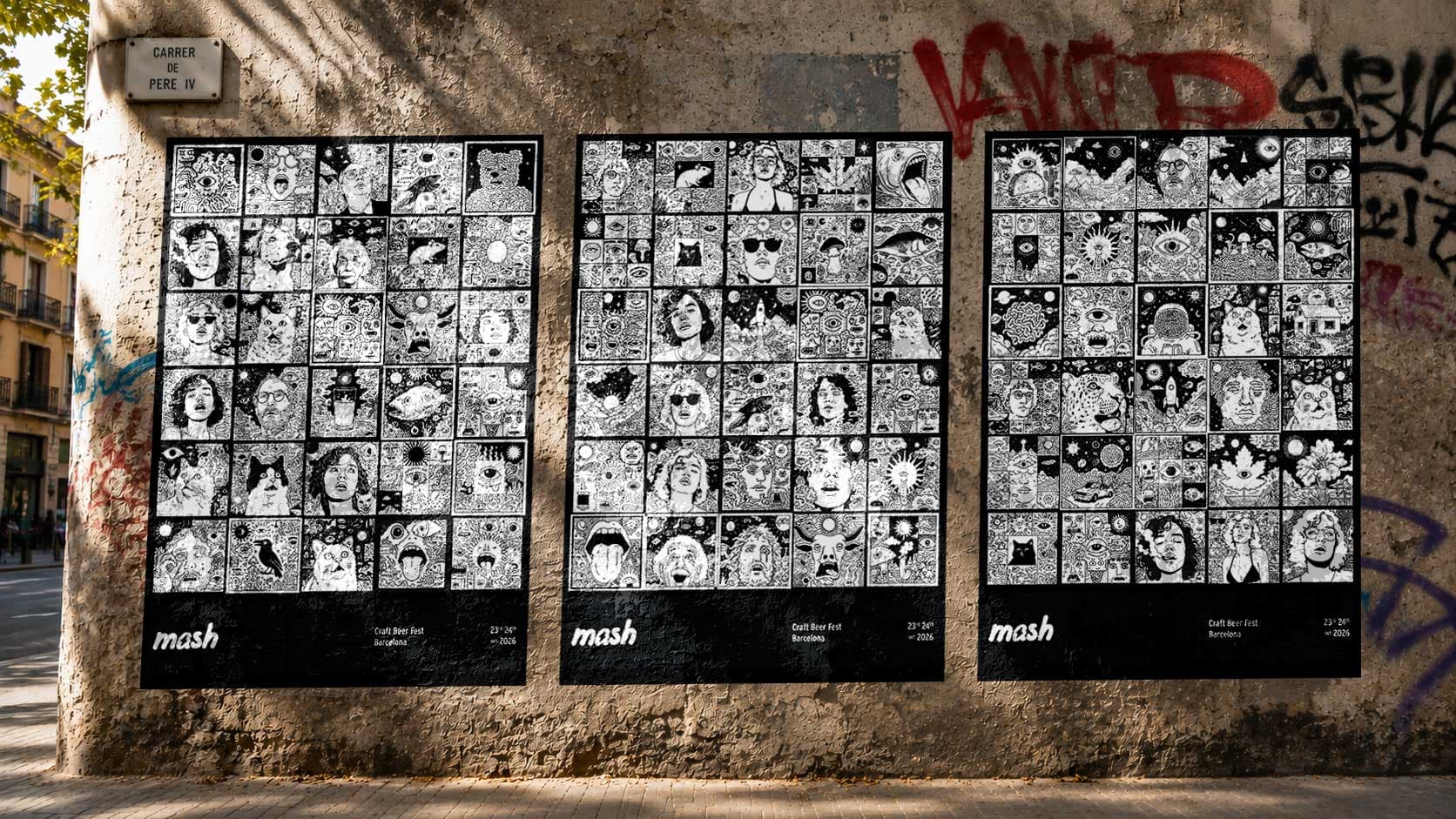
Mash is an international craft beer festival in Barcelona, now in its eighth edition. A team runs it. I help with the design side and have done so for years. Every edition, somewhere between booking the line-up and opening the doors, the same set of jobs grows: festival posters, an Instagram post for each attending brewery, and the printed signage that goes up around the venue.
None of it is hard work. It is just slow, repetitive, and there is always more of it than I remember from last year. Breweries fly in from across the globe, which means dozens of little graphic jobs that all look slightly different. A logo to find, clean up, drop into a template, export, name correctly, upload. By the time I finish, I have made the same mistake three times and the festival is a week closer.
What we actually did about it
So instead of clearing another weekend for it, I spent an afternoon and built a small tool for Mash. We have called it a trip in tiles. Underneath sits a deck of 160 hand-drawn black-and-white tiles (eyes, mushrooms, faces, suns, all the usual psychedelic suspects), and the tool composes them into the things we need.
- Posters. Pick a vibe (psychedelic, surreal, occult, take your pick), hit summon poster, and out comes an A2 festival poster on a 5×6 grid.
- Brewery frames. "Paste a brewery's website. We fetch their logo, lay it inside a 5×5 deck of tiles with a 3×3 hole, and frame it in black or white." That is the Instagram tile for every attending brewery, generated from a URL.
- Signage (coming next). Upload a spreadsheet of breweries and the tool generates the printed signage for the venue.
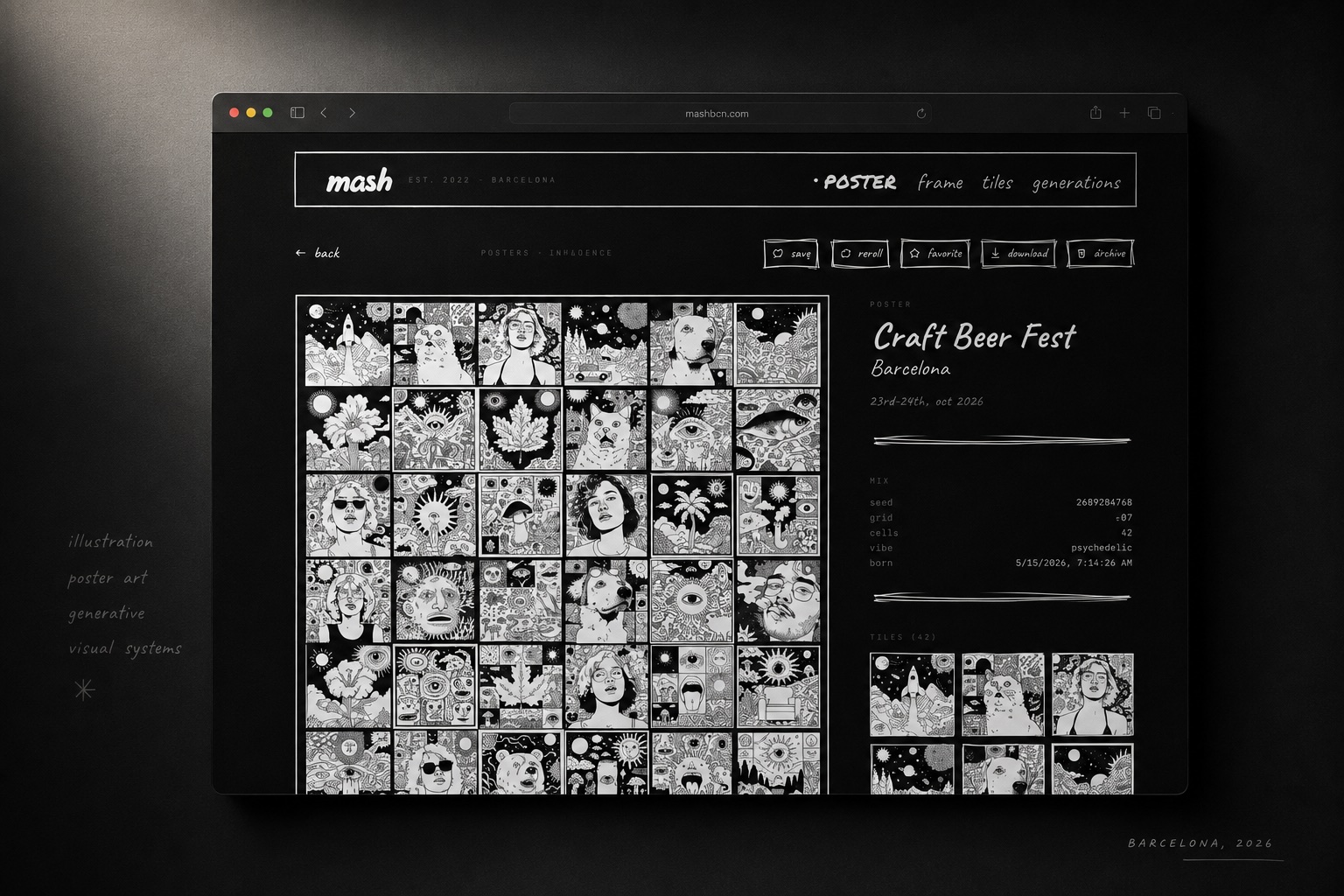 The poster screen. Pick a vibe, hit summon, out comes the festival poster.
Every output gets logged in a gallery alongside the rest, which is useful when the team needs to pick between options.
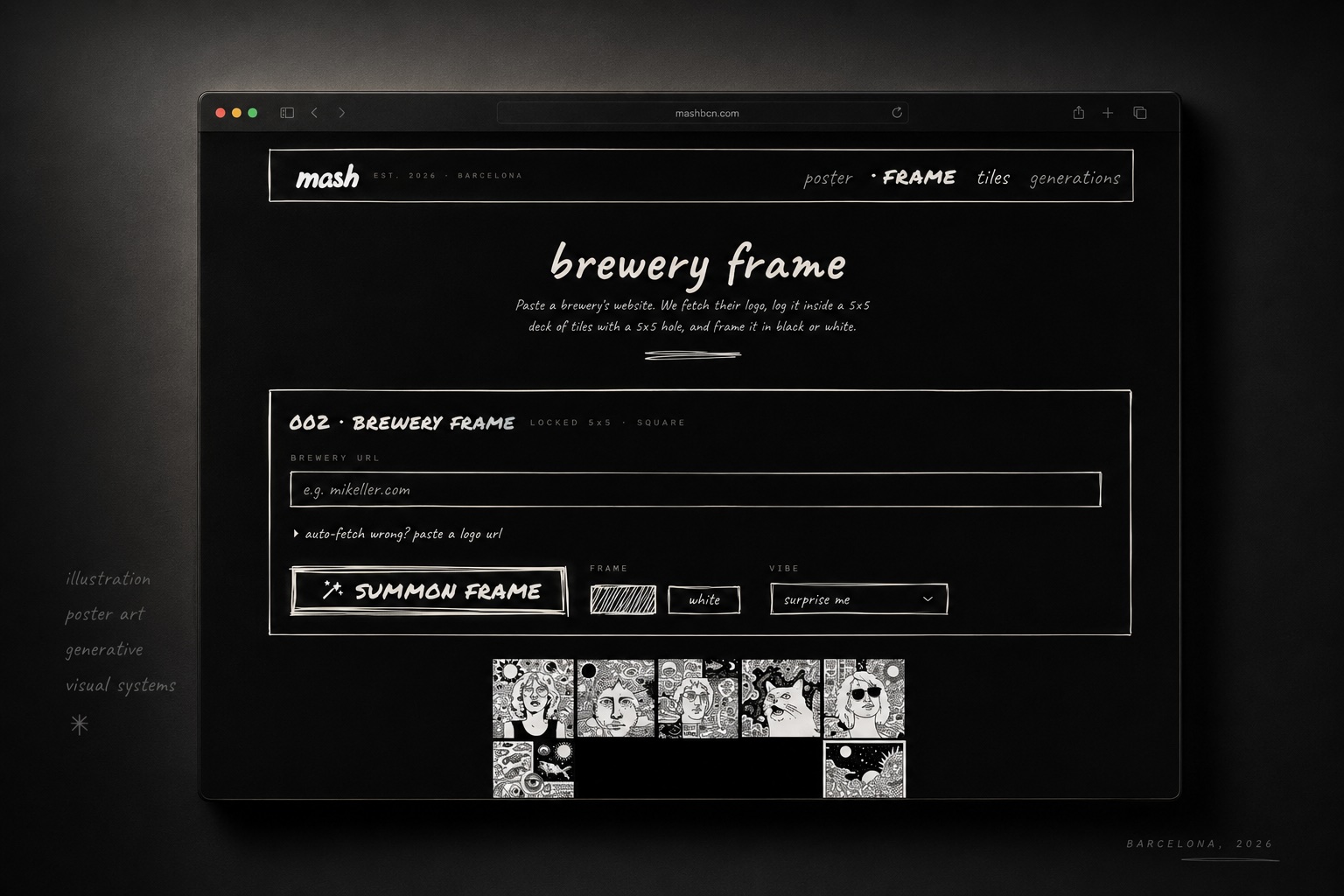 Paste a brewery's URL, the tool fetches their logo and frames it. Dozens of breweries used to be a long evening.
The actual point
Mash is a craft beer festival. We are not the audience for a big "digital transformation" pitch. We did not need one.
What is interesting is that the tool took an afternoon. Not a month. Not a procurement cycle. Not a budget round. There was no agency involved, no kick-off meeting, no roadmap. I had an annoyance, I sat down, and by the end of the day it was largely gone. That maths is genuinely different from what it was even two years ago, and most organisations have not caught up to it yet.
If something costs your team a few hours every quarter, it is probably already worth automating. If it costs you a few evenings every year, it was worth automating a long time ago. The reason people put it off is usually not the cost of building. It is the assumption that building is a project. It no longer has to be.
The same logic scales. If an afternoon of work can do this for an international festival in Barcelona, the same thinking applied to a finance team's monthly reporting, a sales team's onboarding flow, or whatever quietly chewed-up corner of an organisation you can think of, is hard to argue with.
Most of the things that grind down a team's evenings are not glamorous problems. They are small, repetitive, slightly different every time. Those are exactly the problems this current generation of tooling is suspiciously good at chewing through.
If something is eating your evenings
If there is a thing in your organisation that everyone groans about every quarter, it probably does not need a project. It needs an afternoon.
We've written before about the same shift on the SaaS side. The maths on building vs buying has moved, and most companies are still paying for software that does ten times more than they need. The festival tool is the same idea in miniature: the things that used to be too small to justify building are not too small any more.
If you've got a workflow that's been quietly costing you nights, get in touch and we'll take a look at which afternoon it needs.

About the author
Andreas Melvær
Managing Director & Co-founder, SmplCo
Andreas is the MD and co-founder of SmplCo. A product nerd at heart, he leads the company's 5-Day Prototype service and has helped 150+ startups and enterprises turn ideas into working digital products. He builds with AI, ships with speed, and occasionally wins marketing awards.
Keep reading
Without a Design System, AI Just Helps You Make a Mess Faster
Vibe-coded internal tools arrive fast and arrive different. A central design system is how an organisation keeps the speed of AI-assisted building and stops the fragmentation.
Who Owns AI-Generated Code? A Founder's Legal Guide
AI tools ship code in minutes. But can you copyright it? What if it copies someone else's work? Practical answers for founders building with AI.
AI and the Demise of Great UI
Everyone can 'design a product' with AI now. Our UI/UX Design Lead, Leonardo Hernandez, on why AI-led design still looks like AI-led design, and what actually earns a user's trust.