BAS TrustDesk – Strategy-to-Execution Validation
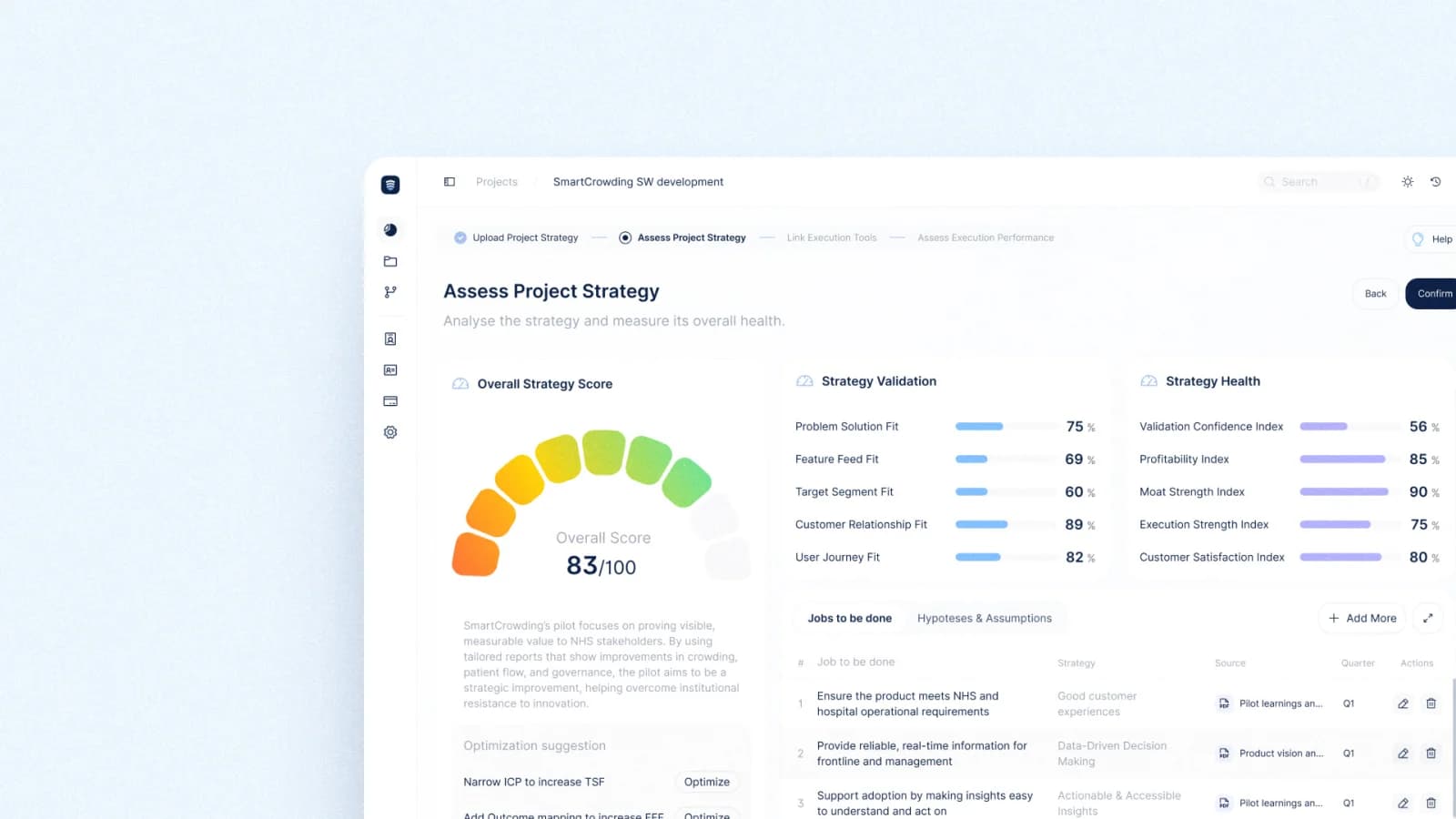
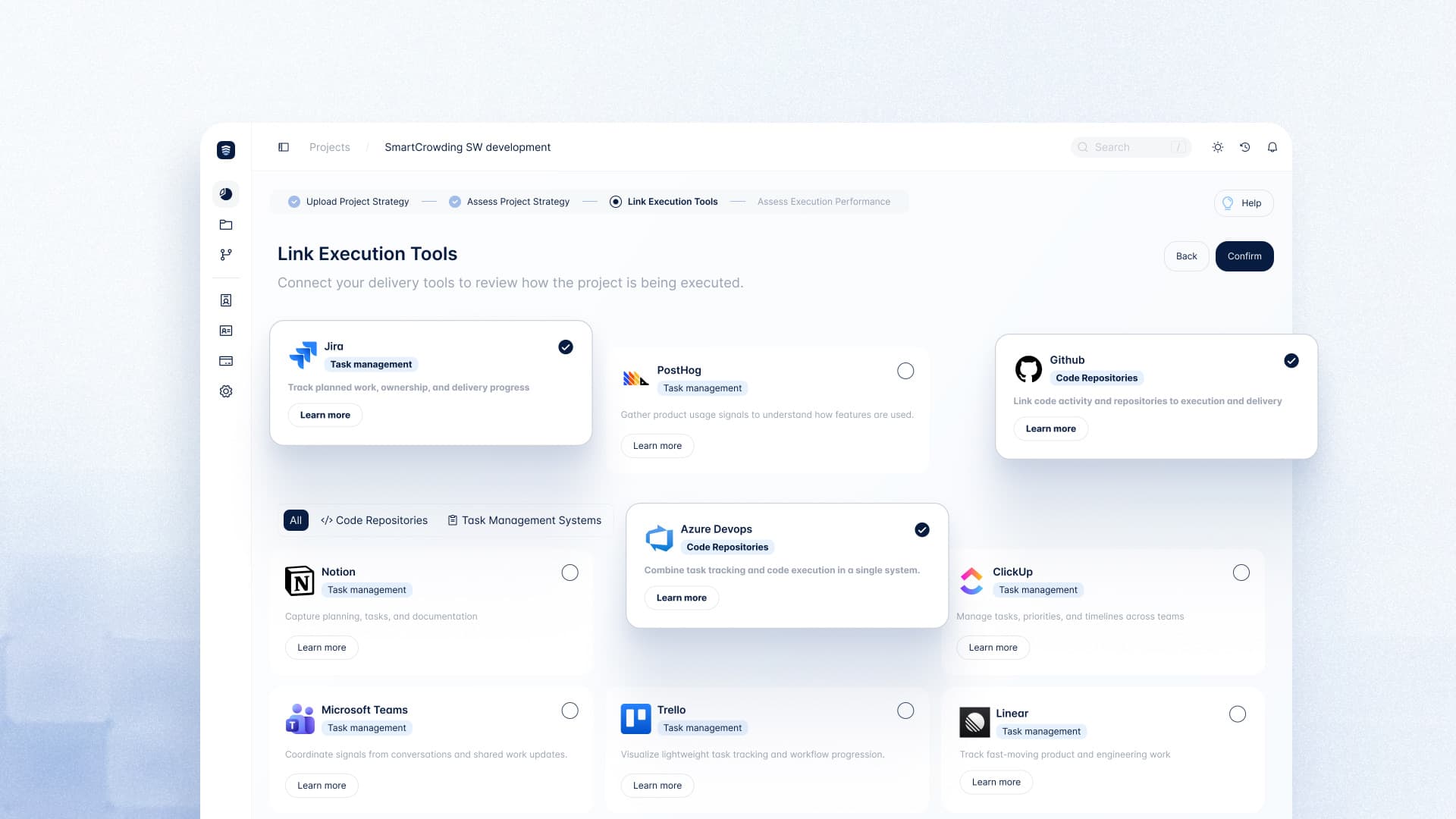
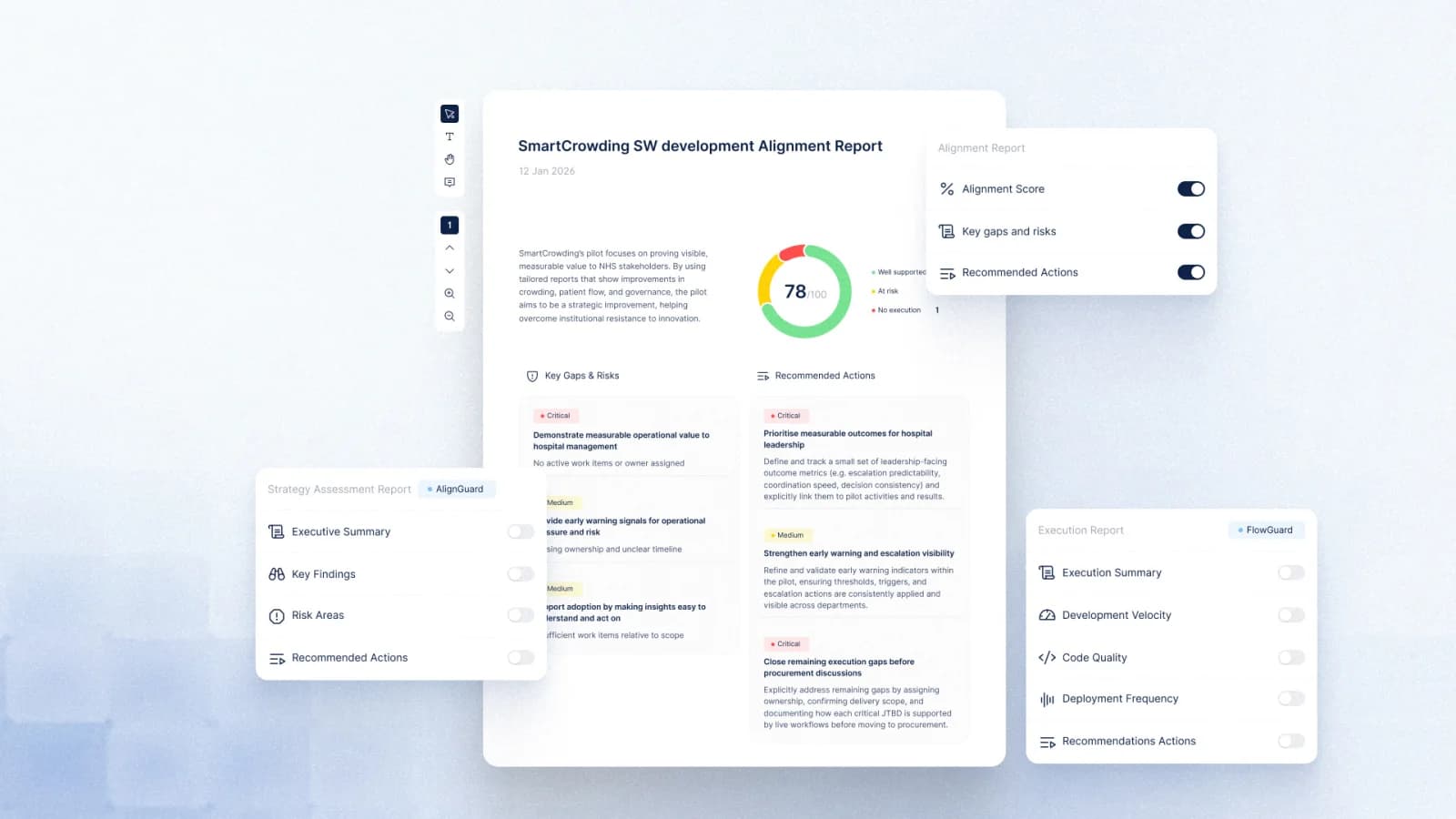
BAS TrustDesk is a strategy-to-execution validation platform for boards, investors, and transformation committees. It connects read-only to Jira, Azure DevOps and GitHub, ingests strategy artefacts, and produces a traceable report on whether a company is building what its strategy said, and whether the team has validated the underlying assumptions before committing engineering spend.
What did the client think?
"We came in with a live product, a handful of customers, and a vibe-coded prototype of where we thought the next version needed to go. Five days with SmplCo gave us two things we could not easily have got on our own: the discipline to pick one primary user, and a design system that has carried through every screen of the rebuild."
Tor Einar Enne Founder, BAS Trust Systems
The Challenge
TrustDesk arrived on a referral from Neetly, already in early production with a handful of customers using it daily. In the weeks before the sprint, the founder had vibe-coded a prototype of where he believed the next version needed to go, directionally opinionated, feature-rich, and built by one person alone on a theory of what users needed. The brief tried to greet six different audiences at once:
- Series C CTOs, as configurators
- Non-executive directors, reading the board pack
- VC partners, running diligence
- Angel investors, doing light DD
- Enterprise PMO directors
- Founders, running TrustDesk on their own companies
The ask was sharper than the average brief: pick one primary user to build for first, and lay a design-system foundation the team could keep building on long-term.
Our Solution
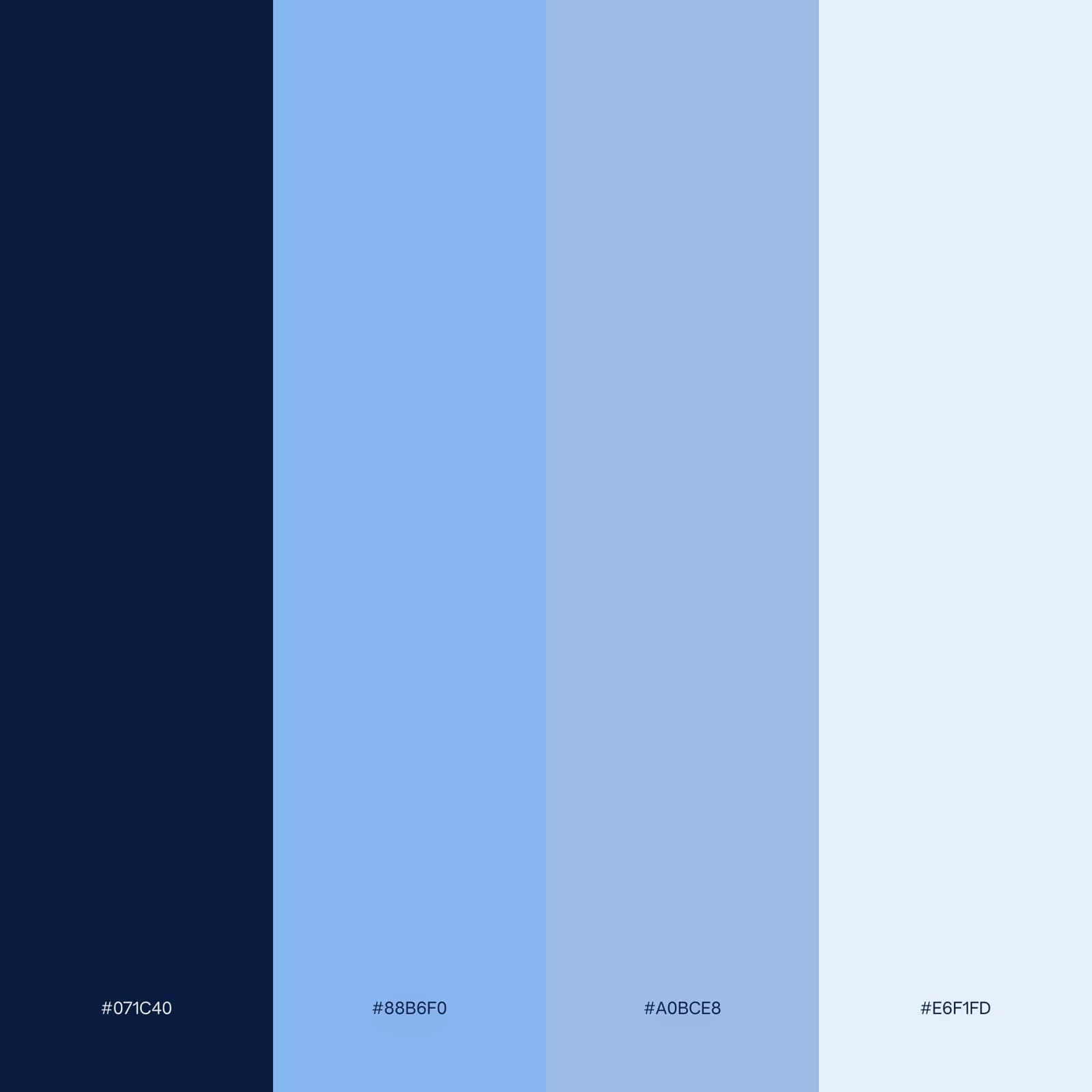
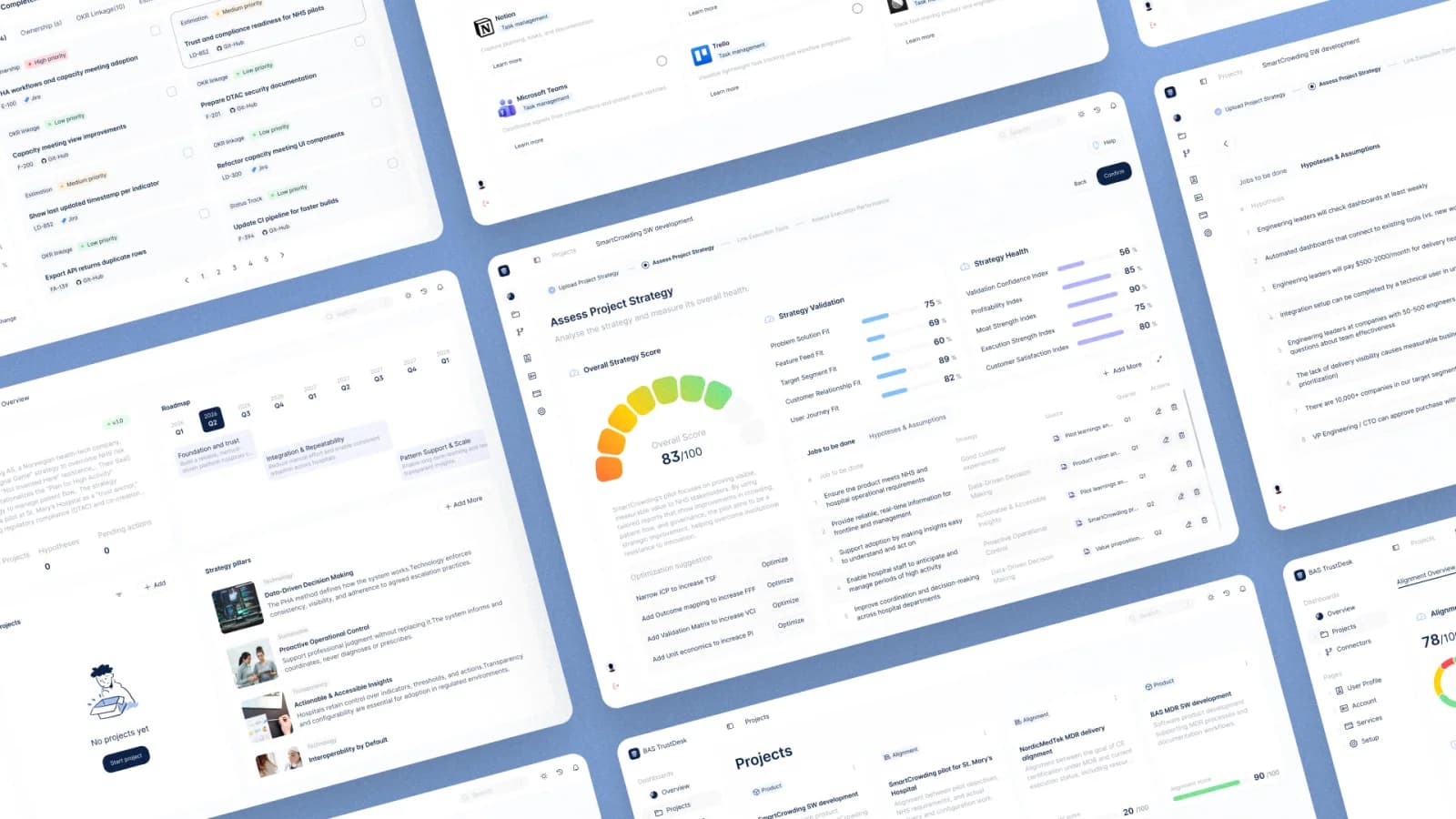
We ran a 5-Day Prototype in early January 2026, paired with a Design System delivered in the same week. By day three the centre of gravity was obvious: the CTO as the primary operator and configurator, the board-pack PDF as the first real artefact, everything else sequenced behind it. By day five, Tor Einar walked away with a clickable hi-res prototype and a system of tokens, components and patterns his engineers could carry straight into production.
What followed wasn't a tweak. TrustDesk rebuilt the application end-to-end on top of the system, cut scope, and carried a single visual and interaction language through every screen. The current version is sharper, clearer about the problem it solves, and easier to use.
Explore
More Success Stories