
How to integrate AI into your product without burning cash
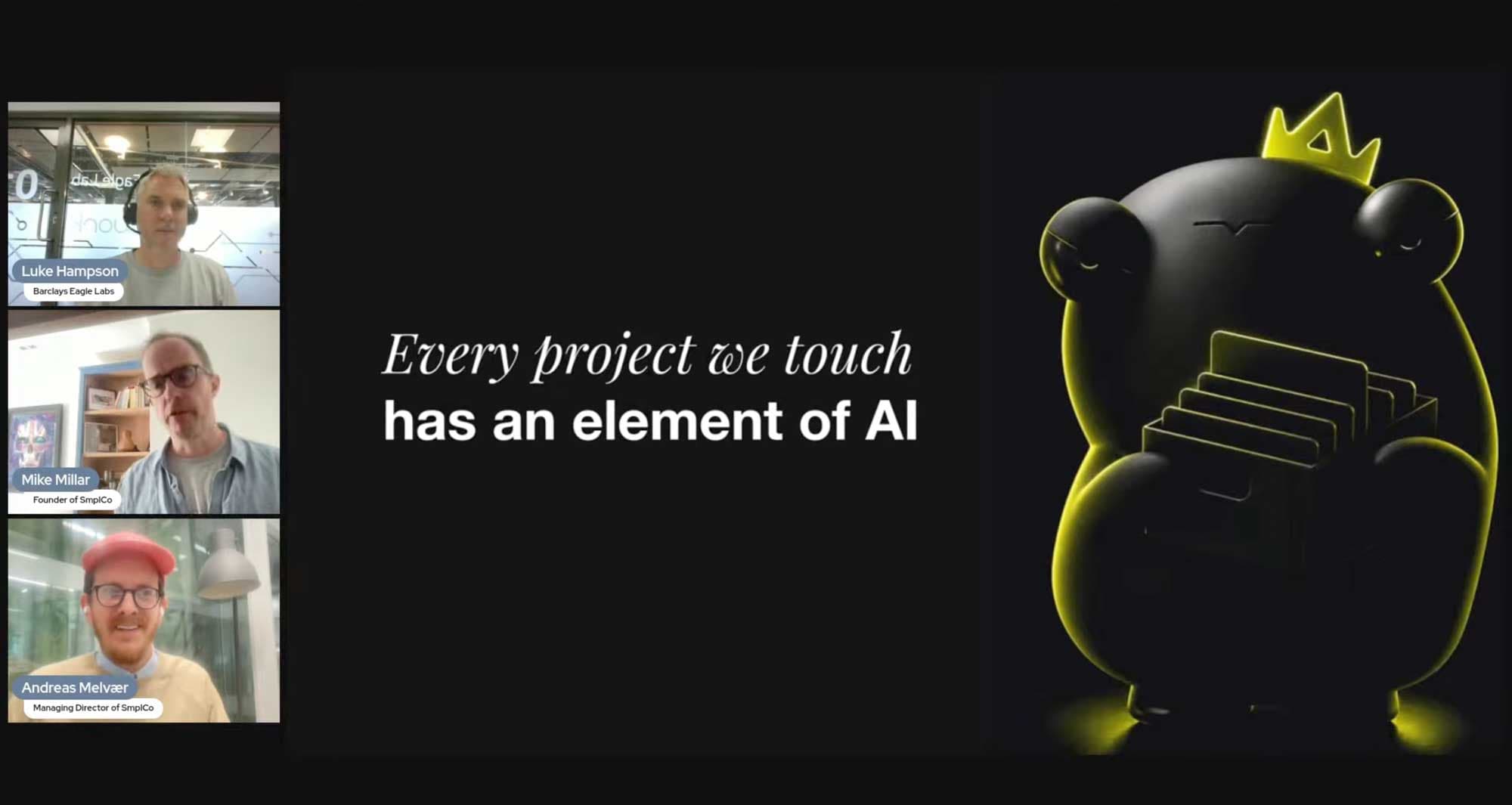
A couple of weeks ago, Mike and I joined Luke Hampson of Barclays Eagle Labs for an hour-long webinar on integrating AI into a product. The signup question was the right one: how do you turn AI from a risky expense into a scalable product advantage?
The recording is up on our site here: Watch the full webinar. Six lessons stood out worth lifting onto the blog.
1. AI to build with is not the same as AI inside your product
A lot of teams blur this line. They are not the same decision. We walked through two SmplCo-built products on the call: one where AI is the engine (it calls Gemini at runtime to write coaching plans), and one where AI was just the construction tool (a hockey-coaching platform built in Claude Code that runs on a vanilla CMS and would still work if every model went offline tomorrow). Both are fine, they just have completely different cost profiles and risk surfaces. Conflating them leads to bad strategy.
2. Tokens cost money
When AI is inside your product, the model serves users at runtime, and every interaction costs tokens. A free feature that calls a model on every keystroke is a fundamentally different proposition from a paid feature that calls it once per session. Map your usage before you ship, not after the bill arrives.
3. Plan before you vibe-code
Vibe coding (talking to an agent and letting it build) works. It works much better when you write the data model, system architecture, and user journeys down first. The most common thing we see is founders bringing in vibe-coded prototypes that look great on the surface and are spaghetti underneath. Untangling that is expensive. Spending an hour planning is not.
Free playbook · 13 pages
Build with AI without building a monster
The workflow Mike and I use with founders every week, planning, designing and shipping with AI. Same framework we walk through in the webinar.
Download for free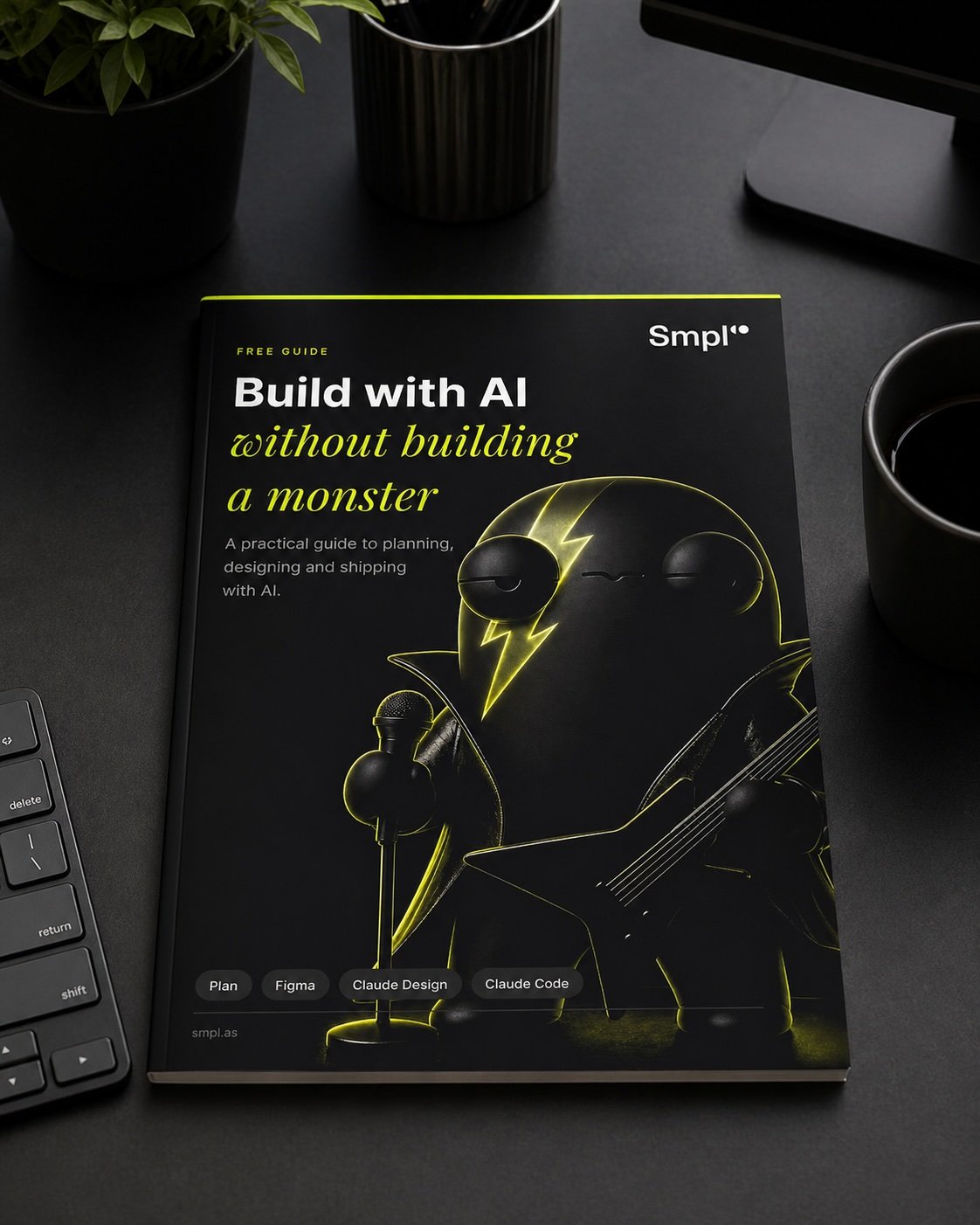
4. Guardrails and the "sleep at night" test
If AI is in your product, it is an attack surface. Prompt injection, token-bill abuse, exposure of unintended endpoints, hallucinations and bias are real. The mitigations are well-understood, scoped prompts, rate limiting, evals, scoped credentials, but they need an owner. Mike's framing: how well do you sleep at night? If you can't answer, you haven't done enough.
5. Defensibility when everyone can code
When everyone can vibe-code an MVP in a weekend, "we built it" is no longer a moat. The investor question gets sharper, not softer. Real moats: proprietary data, distribution, brand, deep domain expertise, regulated workflow integrations. Non-moats: "we have a clever prompt" or "we wrap a foundation model". If you are reselling Anthropic tokens, that is a feature, not a defence.
6. AI for the business, not just the product
Most founders are focused on putting AI in the product. The bigger near-term ROI is putting AI inside their business, replacing the SaaS stack they only use 10% of with internal tools they own. We rebuilt most of SmplCo's internal stack this way; it is now a weekend of focused work for someone who knows what they want.
We've packaged this whole framework into a free guide: The AI Integration Playbook. And the full webinar recording is here if you want the long version.
If you're trying to figure out where AI fits in your product or your business and want a second pair of eyes, book a call, happy to map it out without the hype.

About the author
Andreas Melvær
Managing Director & Co-founder, SmplCo
Andreas is the MD and co-founder of SmplCo. A product nerd at heart, he leads the company's 5-Day Prototype service and has helped 150+ startups and enterprises turn ideas into working digital products. He builds with AI, ships with speed, and occasionally wins marketing awards.
Keep reading
Turn AI From a Risky Expense Into a Product Advantage
Most teams bolt AI onto the wrong feature, burn cash on the wrong model, or wait too long. The four-stage framework we use to help founders avoid all of this.

A Legal AI Firm Just Hired Jude Law. Storytelling Is Back As A Must-Have Moat.
A legal AI company just hired Jude Law. In a world where anyone can vibecode a product, storytelling is a crucial moat for you & your tech. Here's why, and how to do it.
When AI Starts Talking to Your Accounting Software
I wired Claude into our accounting software. Then I called the lawyers. Notes from the build, the legal grey zones, and the 4 June event with CMS Kluge.