
A Legal AI Firm Just Hired Jude Law. Storytelling Is Back As A Must-Have Moat.
In short: In a world where anyone can vibecode a product, storytelling has re-emerged as both a crucial defensive moat for your tech, and a way to get noticed in the most distracted time in human history. Here's how you can tell a story and build a brand at the same time.
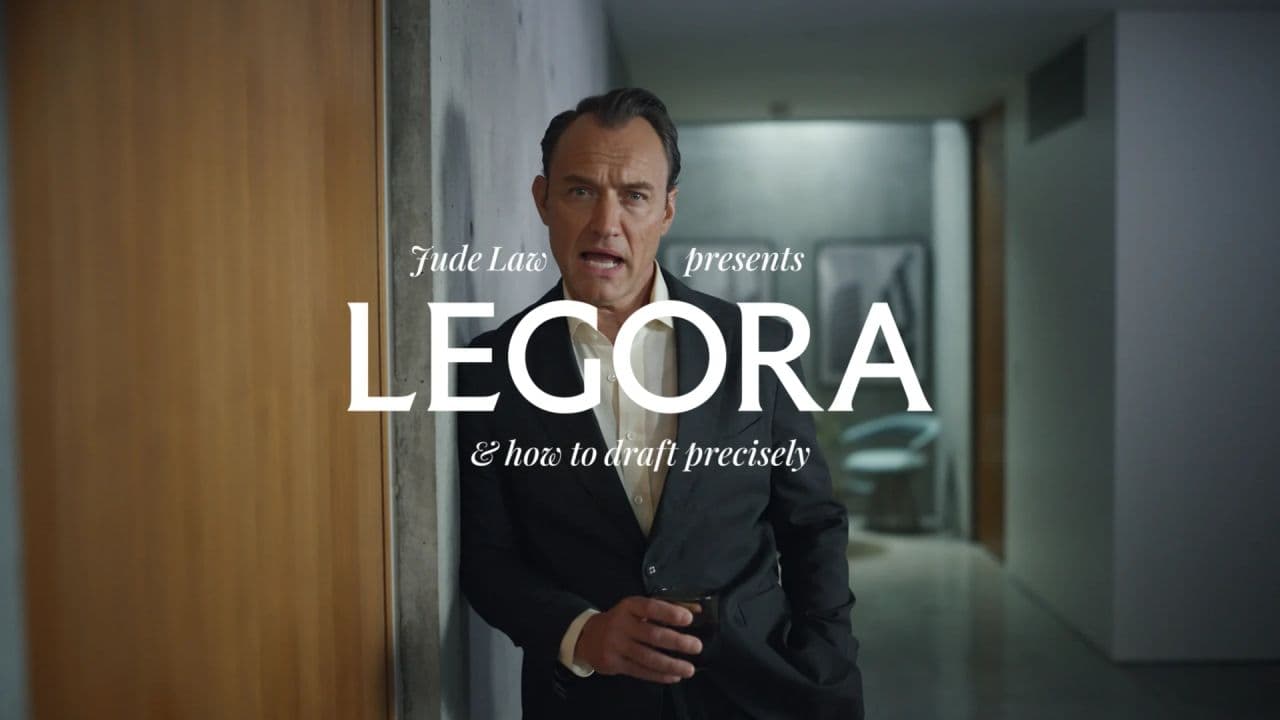
A legal AI company just hired Jude Law.
Not a lawyer. Not an AI expert. Jude Law.
The company is Legora and it's just hit $100m in ARR and is on track to hit $250m in ARR by the end of the year. They've just raised $550m at Series D.
And they've spent some of it on a Hollywood actor opening a campaign with the line:
"It's fair to assume I know quite a bit about law, after all, my name is Jude."
You might think this is a PR trick. A flashy, vacuous piece of ad-land tomfoolery, born of suddenly having too much cash.
But the Chief Revenue Officer claims the campaign has made a big difference, generating a $50m sales pipeline.
Welcome to marketing tech in a vibecoding age.
What that signal actually means
We're coming out of a cycle where tech would often sell itself.
That technical sale is over. Take the Legora example: legal firms know AI works. Now, they're not just asking "does this product do the thing?", they've started asking "do I trust the people behind it?".
And trust isn't won with a feature comparison table. Trust is a brand game. It's about what people say about you when you're not in the room.
Jude Law isn't a gimmick. He's a signal. The signal that Legora knows the fight has moved from flashy tech product (AI obvs) towards perception. And they've decided to fight it where their competitors aren't.
That means a plethora of age-old marketing adages are back in fashion ...'Sell the sizzle, not the sausage' ...'People don't buy what you do; they buy why you do it.' And so on, and so on.
The point is we are in an age where technological proliferation has smashed headlong into the most distracted era in human history.
And that means standing out from the crowd is incredibly important ... and incredibly difficult.
Welcome to the age of vibecoding
There's a bigger force at work here, and every entepreneur and innovator needs to understand it.
A year ago, you needed engineers, a stack, six months and a runway to build a credible product. Today an enterprising teenager with Claude, Lovable, or Base 44 can ship a working B2B SaaS prototype before dinner.
We've started calling it vibecoding, and it has completely demolished the assumption that building the thing is the hard part.
When everyone can build, building alone stops being the moat - particularly when so many vibecoding builds don't stand a chance of being sustainable or scalable (we've got a whole guide to building well here.
But, whether you build well or not, the core truth remains: if your differentiator is your product alone, there's a good chance you are differentiating on the cheapest, most replicable thing in the entire stack.
So what is a moat exactly?
A moat is the thing that can't be instantly vibecoded. It's the thing a competitor can't replicate over a free weekend.
And your proprietary tech - or clever application of multiple other pieces of tech - MUST still be a crucial part of that moat.
Stories only work if you base them on something of substance.
But much harder to replicate than your tech is how people feel when they hear your name. The story they tell their colleagues about you. The reason they pick you when, on paper, the two options look identical.
That's the power of brand. And the engine that builds brand at speed is storytelling.
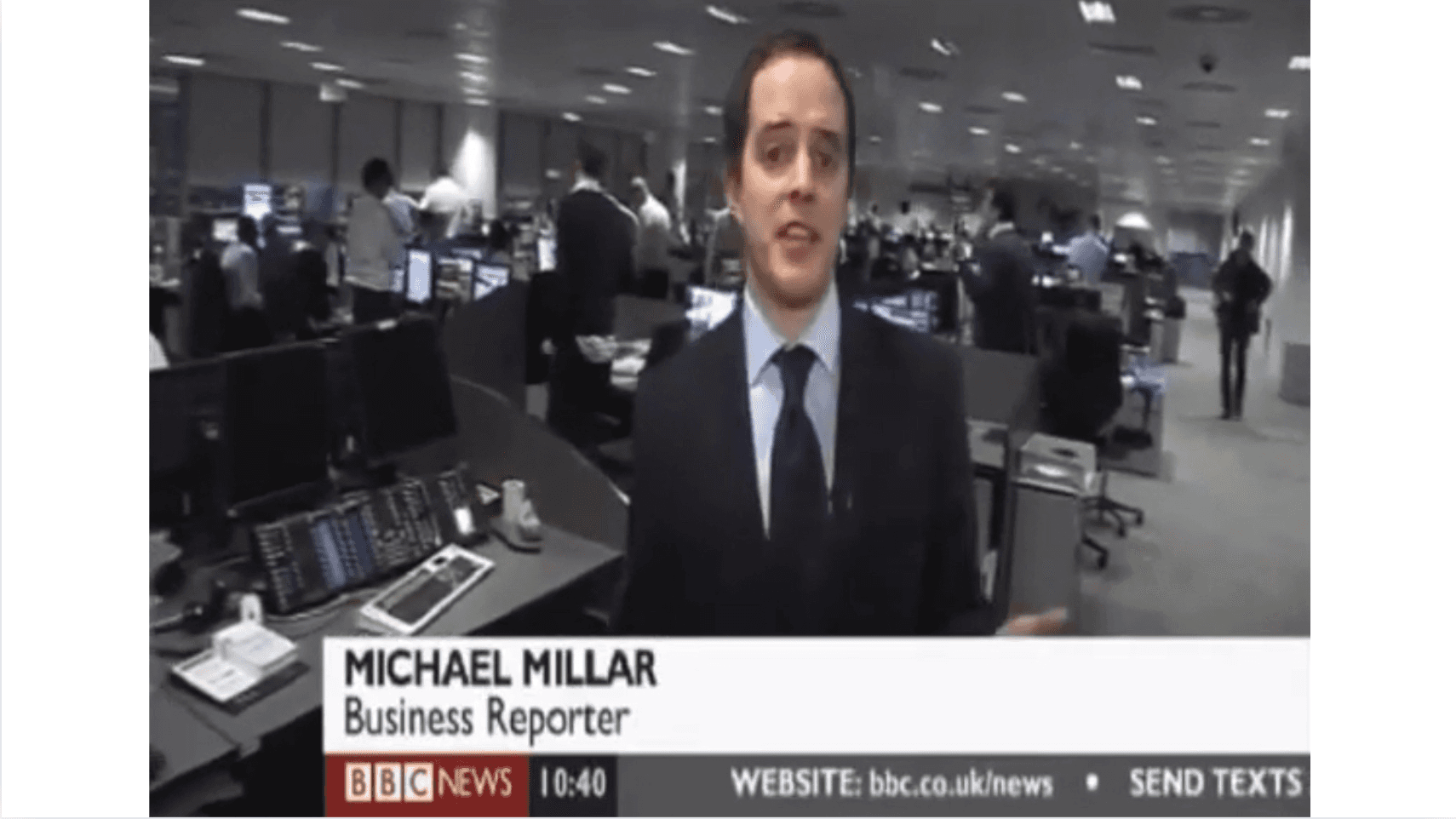 The author, telling stories back in the day
"Would you ask someone to marry you on the first date?"
Probably not. Yet that's exactly how most tech entrepreneurs go to market.
They lead with the product. The features. The integrations. The roadmap. The unit economics, if they're feeling really seductive.
But customers, even B2B ones, even procurement teams, (even general counsel in the case of Legora), don't buy that way. They buy from brands they feel something about. Google's own research found:
- 50% of B2B buyers are more likely to buy if they connect emotionally with your brand
- 71% purchase when they see personal value in your business
- 69% will pay a higher price to do business with a brand they believe in
We aren't talking about consumer purchases of fizzy water. These are CFO-signed enterprise contracts. And they still hinge on feeling.
That's because feeling is a shortcut for trust. And in a world where anyone can vibecode a passable product, trust is a variable that is worth competing on and will repay you many times over.
Why storytelling, specifically?
Because it's the format the human brain is actually built for.
Studies show neural activity increases roughly fivefold when we hear a good story. People retain about 70% of information delivered through stories, versus only 10% from data and statistics. A good story triggers dopamine (memory) and oxytocin (connection). A good spec sheet triggers… nothing.
This isn't romanticism. It's neurology.
That's why the WSJ recently declared big US companies are desperately seeking 'storytellers'. They've finally noticed that engineering can scale, distribution can scale, the algorithm can scale, but the part that actually moves a buyer over the line is a human telling another human something they want to hear.
In 2026 a lot of people are realising they have to rediscover one of the oldest skills humanity possesses: storytelling.
But - and this is a BIG BUT - there's an elephant in room here: if AI can magically produce products, it can, of course, magically create stories. Bad stories. Drab, dull, mid-of-the-road stories. And, by God, we're drowining in those.
7 rules to tell stories that actually land
The rules of good storytelling haven't changed since we were doing it around campfires. The medium has, but the principles haven't.
Underpinning everything is the need to tell stories with honesty
- Pick a defined audience. One size never fits all. Generic stories land generically, which is to say, nowhere.
- Make it all about them. All good stories aim to entertain, educate, inspire, and/or inform. They prioritise giving value (in whatever form that takes). They do not scream: "Look at me, I'm great"
- Benefits before features. Nobody cares about your shiny thing until they know what it does for them.
- Use T.R.U.T.H. All the best stories are Topical, Relevant (to your audience), Unusual, contain Trouble / conflict, and have Humans at their heart. (Yes, even in B2B. Especially in B2B.)
- Consistency beats virality. Show up reliably enough that showing up becomes expected. That compounds. Viral doesn't.
- Pick a voice and stay in it. Clarity over flare. Always.
- Add hooks throughout. Strong opinions, questions, weird facts, a memorable line, a quote.
If you read those and felt a stab of we don't do most of those, you're not alone. Most companies are rubbish at storytelling, which is exactly why getting it right wins you so much ground.
Free guide
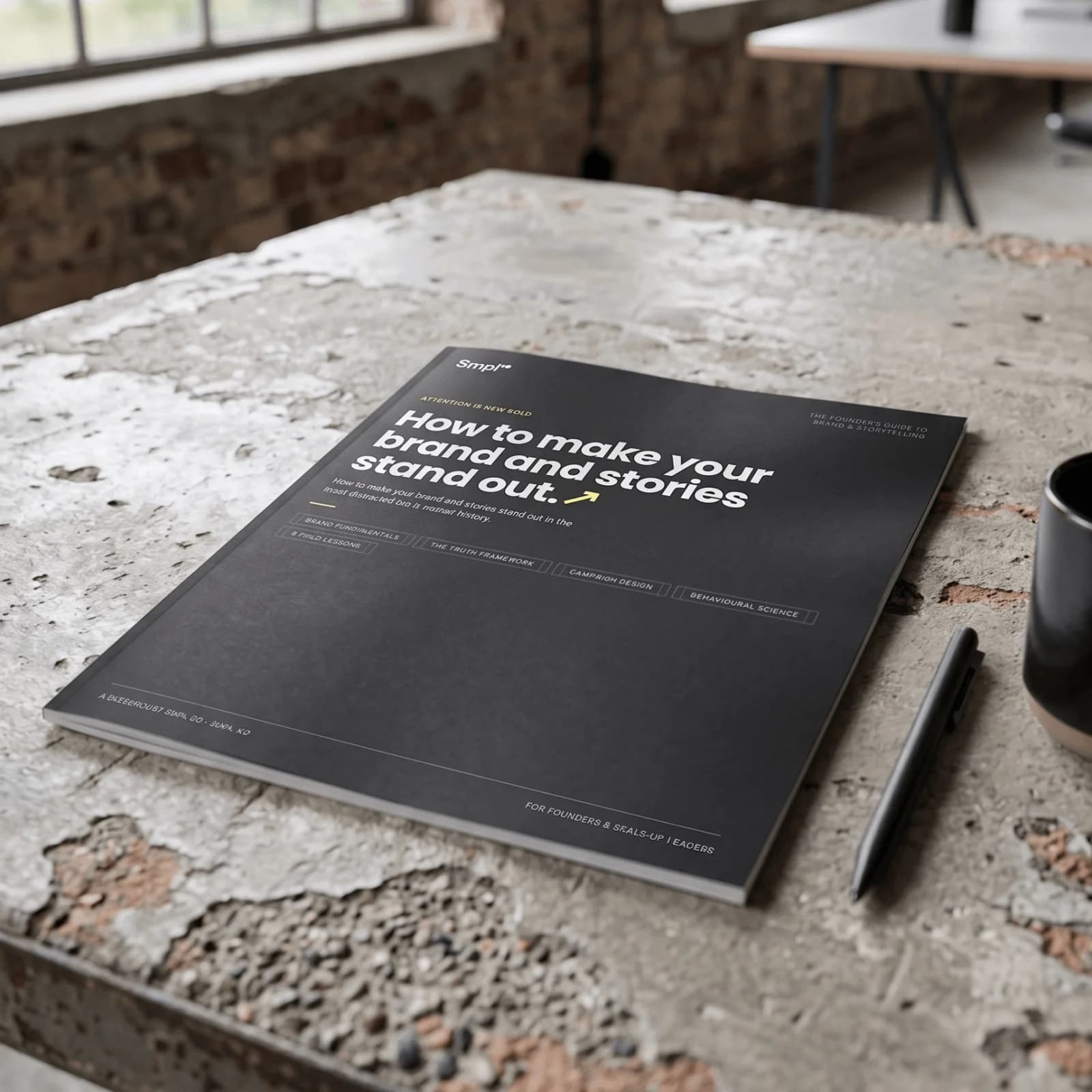
Attention Is New Gold
6 pages of frameworks for making your brand and stories stand out, TRUTH storytelling, behavioural science, and 6 field lessons from real brand-building.

Where are your Jude Law moments hiding?
You don't need a $600M raise to do what Legora did. You need to find the thing in your business that's worth talking about, and then talk about it like a human.
Stories live in places founders overlook:
- Your take on the news, trends, or someone else's story (this article is exactly that, a Jude Law ad triggered it)
- Your origin story, why you built this, not what you built
- The inspirations and bets behind your decisions
- Your team's stories, the messy, funny, unrepeatable ones, not the LinkedIn headshots
- Customer case studies told as stories, not as testimonials. Tension → insight → outcome.
- The rough alongside the smooth. People trust founders who admit what didn't work. Polished is forgettable.
If you can't work out how to tell a story, fall back on the Pub Test: how would I tell this to my ideal customer down the pub? If it survives there, it'll survive anywhere.
What Legora actually bought
Look at the Legora campaign one more time. What did they actually purchase with Jude Law's appearance fee?
Not awareness. They could have bought awareness with paid media at a fraction of the cost.
What they bought was a story people would tell each other, at law firm coffee machines, on commutes, in posts like this one. Free distribution. Genuine emotional response. A category that previously thought of itself as serious and dry suddenly associated with something charming and self-aware.
That's the trade every founder should be making right now, at whatever scale you can afford. I suspect you can't afford Jude Law. But you can do the equivalent. Find the unexpected, human, slightly-too-bold thing that signals you understand the world your customer lives in.
In a world where everyone can build, the founder who can tell wins.
Want the full version?
If you want the frameworks we use to help founders earn this kind of attention, TRUTH storytelling, the master story formula, the behavioural science principles that actually move buyers, and six field lessons from real brand-building, we've put it all into a free 6-page guide.
Download: Attention Is New Gold, The Founder's Guide to Brand & Storytelling
These are the frameworks we use every day to help founders earn attention that converts.
And if you want to talk through how to apply any of it to your own situation, drop me a line or get in touch. I love a bit of storytelling...

About the author
Michael Millar
Partner & Co-founder, SmplCo
Michael is a partner and co-founder of SmplCo. Before taking on go-to-market responsibilities for both SmplCo and our clients, he was a journalist (BBC, Reuters, Spectator), political lobbyist, and global comms leader.
Keep reading
Attention Is the New Gold. Here's How Founders Win It.
You do not have an attention problem, you have a relevance problem. What founders get wrong about winning attention, and the frameworks we use to fix it.
Your Brand Is Too Polished. That's the Problem.
A half-chaotic bar in Stavanger built a more distinctive presence than companies with much bigger budgets. Here is why polished is forgettable.

The big companies adopting an ancient art to win customers
In 2026 there is something more valuable than gold. More valuable than rare earth metals. More valuable even than goddamned printer ink. That thing? Attention.