
Attention Is the New Gold. Here's How Founders Win It.

In short: The average person encounters between 4,000 and 10,000 brand messages a day. Most of them don't land. For founders, this creates a painful paradox: you need attention to grow, but the cost of earning it keeps rising while the window to earn it keeps shrinking. The good news is that most brands compete badly, and the founders who understand this can win disproportionate attention with simple, practical frameworks.
You Don't Have an Attention Problem
Most founders think they're losing the battle for attention because they lack budget, reach, or followers. Usually the real issue is simpler: what they're saying isn't specific enough to matter to anyone in particular.
Generic content slides straight past people. Specific, honest, particular content, the kind that makes someone think "this is written for me", stops them cold.
The goal isn't to be visible to the wrong million. It's to be unmissable to the right 1,000.
What Attention Actually Costs
Before we talk about frameworks, let's get the stakes right. We're producing more content than at any point in human history, and most of it is ignored. People have become very selective and efficient at filtering out anything that doesn't matter to them.
For a startup or scaleup, this means:
- Cold outreach open rates are falling
- Organic social reach is collapsing
- Paid CPMs keep climbing
- The time someone will give you to make your point is measured in seconds
If your content isn't earning attention on its own merits, throwing more of it at the problem just makes the problem bigger.
The Cornerstones of Brand Value
A brand can be summed up as "what people say about you when you're not in the room." Before worrying about content or campaigns, the brand itself must earn trust. A strong brand makes a promise that is:
- Valuable, genuinely useful to the people you serve
- Relevant, right fit for your specific audience
- Differentiated, clearly distinct from alternatives
- Trustworthy, delivered consistently over time
And most importantly, delivered consistently. Each quality builds on the last. You can be valuable but not relevant (wrong audience). Relevant but not differentiated (forgettable). Differentiated but not trustworthy (hollow). Only when all four are present, and sustained, does a brand compound in value.
If you're stuck getting attention, the highest-leverage question isn't "how do we post more?" It's "which of these four is weakest right now?"
The TRUTH Framework
At SmplCo we run every piece of content through a framework we call TRUTH. If a story fails more than two of the five, we rework it. The Tension test is the one most founders consistently fail.
T, Topical. Is this connected to something people are thinking about today? Timely stories travel further.
R, Relevant. Would your ideal customer think "this is written for me"? Or does it read like it was written for everyone?
U, Unusual. Is there something surprising or counterintuitive here? Predictable stories are forgettable stories. (The classic: "man bites dog.")
T, Trouble / Tension. What's broken, at stake, or unresolved in this story? Every great story has a problem at its centre. Without tension, there's little reason to keep reading.
H, Human. Who is the real person at the centre of this? Real people, real stakes, real emotion. The more specific and human, the more universal its appeal.
The master formula, if you want to simplify it even further: "Most people think X, but I've come to believe Y, which means Z." If you can't complete that sentence, you don't have a story yet, you have a topic.
Where Good Stories Come From
Points of view are much better received than information alone. Combine what you know with what you believe.
- Industry-related content (what's going on, what's changing) works best with cold audiences who don't know you yet.
- Organisational content (your stance on how to do business, how to treat people) builds trust with warm audiences.
- Product content (your expertise applied to real-world problems) converts audiences who are already considering a solution.
Most founders default to product content far too early. They post about what they're selling, when the audience doesn't yet know why they should care.
8 Principles of Behavioural Science That Win Customers
Customers don't make rational decisions. They think they do, but they don't, they make fast, intuitive ones, and then rationalise them afterwards. Understanding the cognitive shortcuts that drive behaviour is one of the highest-leverage things a founder can learn.
Here are the eight that matter most:
-
Social proof, when uncertain, people look to what others are doing. Lead with specific customer numbers and verbatim quotes. "Over 3,000 teams use us" beats "trusted by thousands."
-
Loss aversion, losses feel roughly twice as powerful as equivalent gains. Reframe around what they're losing by not acting. "Don't lose another deal" often outperforms "close more deals."
-
Authority bias, people defer to perceived experts and credible sources, often without questioning the underlying evidence. Earn and display authority signals: press coverage, awards, advisors, speaking slots.
-
Reciprocity, when someone gives us something, we feel a deep obligation to give something back. Give genuine value before asking for anything. The gift must feel unconditional to work.
-
Default effect, people stick with whatever option requires no active choice. Changing defaults is one of the highest-leverage design moves. Make signing up easier than not signing up.
-
Cognitive fluency, the easier something is to understand, the more trustworthy and credible it feels. Clarity signals competence. Complexity signals risk. Rewrite your homepage until a 12-year-old could understand it.
-
Anchoring, the first number someone encounters sets a reference point that shapes all subsequent judgements. Always show your highest pricing tier first. Name your number first.
-
Peak-End Rule, people judge experiences by how they felt at the peak and at the end, not the average across the whole experience. A rocky middle is forgivable if the peak and ending are exceptional. Obsess over onboarding and the renewal moment.
The most powerful combination: loss aversion + social proof + reciprocity. Show what others are gaining that your prospect is currently missing, and give them something useful for free before you ask for anything.
Free guide
Attention Is New Gold
6 pages of frameworks for making your brand and stories stand out, TRUTH storytelling, behavioural science, and 6 field lessons from real brand-building.
Download for free
6 Field Lessons That Actually Move the Needle
We've distilled years of brand-building into six lessons we find ourselves repeating to founders over and over.
1. The founder voice is an unfair advantage, if you actually use it.
Institutional brand content from a startup is almost always weaker than content from the founder. People follow people, not logos. Your perspective, your reasoning, your mistakes, your bets on the future, none of that can be replicated by a competitor. The most powerful thing you can do for your brand costs nothing except courage: write in your actual voice about things you actually believe. Safe content is invisible content.
2. Story structure is a skill, not a gift.
The founders who communicate well aren't necessarily more interesting, they've learned how to structure what they say. Use this: Tension (something broken) → Insight (what you've learned) → Implication (what it means for how they should act).
3. Consistency beats virality.
Everyone wants the viral moment. But the brands and founders with durable attention aren't the ones who went viral. They're the ones who showed up reliably over time until showing up became expected. Virality is a lottery. Consistency is a compounding investment. Define your minimum viable content commitment, the volume and quality you can honestly sustain even in a bad week.
4. The medium is part of the message.
Most founders default to the formats they're most comfortable with rather than the ones most effective for what they're trying to say. Long-form writing builds authority over time. Short video earns attention fast but is easily forgotten. Podcasts create intimacy and loyalty that other formats rarely match. Events and roundtables generate high-trust attention no algorithm can replicate.
Ask where your ideal customers are already paying attention voluntarily, not where they're being targeted. These are their "spheres of influence." Choose the format that lets you demonstrate your specific edge most credibly.
5. Distribution is at least half the work.
The best content nobody sees is just a diary entry. Most founders spend 90% of their effort on creation and 10% on distribution. It should be closer to 50/50. Distribution means building genuine relationships with people who have existing audiences, understanding which platforms have algorithmic tailwinds right now, and repurposing intentionally across channels.
6. Be honest with yourself about what you're putting off.
What's one thing you've been putting off for your brand because it felt too risky, too personal, or too time-consuming? And what would it mean for your business if you actually did it?
Usually the answer to that question is the highest-leverage thing you could do this quarter.
The Quick Reference
If you want to distil everything above into a single checklist:
- TRUTH test, Topical, Relevant, Unusual, Trouble, Human. Run every story through it before publishing.
- Master formula, "Most people think X, but I've come to believe Y, which means Z." If you can't complete it, you have a topic, not a story.
- Behavioural triple, loss aversion + social proof + reciprocity.
- Founder voice first. Personal beats institutional every time.
- Consistency compounds. Pick a cadence you can sustain on a bad week.
- Match format to purpose. Where do your people actually pay attention?
- 50/50 create vs distribute. The best content nobody sees doesn't count.
Want the Full Version?
We've put all of the above, plus the detailed behavioural science cards and the full field lesson framework, into a free 6-page guide.
Download: Attention Is New Gold, The Founder's Guide to Brand & Storytelling
It's genuinely practical. No buzzword salad, no thought-leadership filler. Just the frameworks we use every day to help founders earn attention that converts.
And if you want to talk through how to apply it to your specific situation, get in touch. It's the kind of thing we help with.

About the author
Michael Millar
Partner & Co-founder, SmplCo
Michael is a partner and co-founder of SmplCo. Before taking on go-to-market responsibilities for both SmplCo and our clients, he was a journalist (BBC, Reuters, Spectator), political lobbyist, and global comms leader.
Keep reading
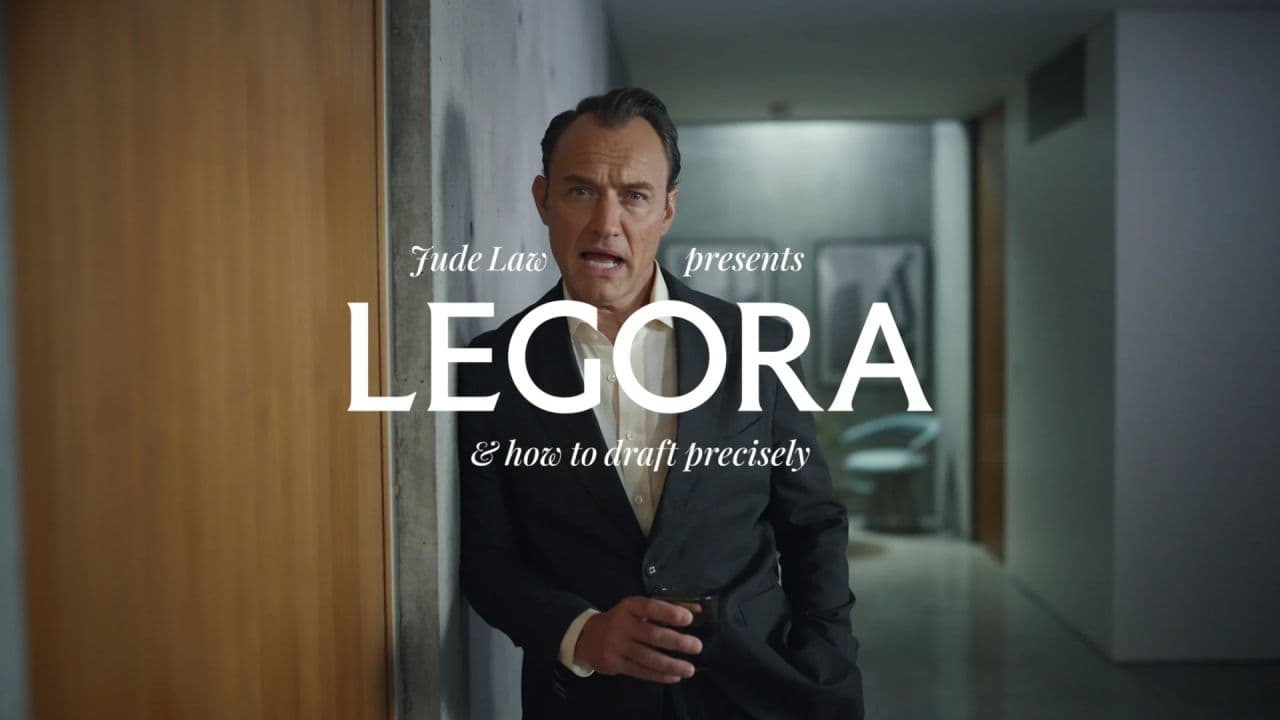
A Legal AI Firm Just Hired Jude Law. Storytelling Is Back As A Must-Have Moat.
A legal AI company just hired Jude Law. In a world where anyone can vibecode a product, storytelling is a crucial moat for you & your tech. Here's why, and how to do it.

Your Brand Is Too Polished. That's the Problem.
A half-chaotic bar in Stavanger built a more distinctive presence than companies with much bigger budgets. Here is why polished is forgettable.

The big companies adopting an ancient art to win customers
In 2026 there is something more valuable than gold. More valuable than rare earth metals. More valuable even than goddamned printer ink. That thing? Attention.