
The 2 most important questions you can ask yourself before pitching to investors
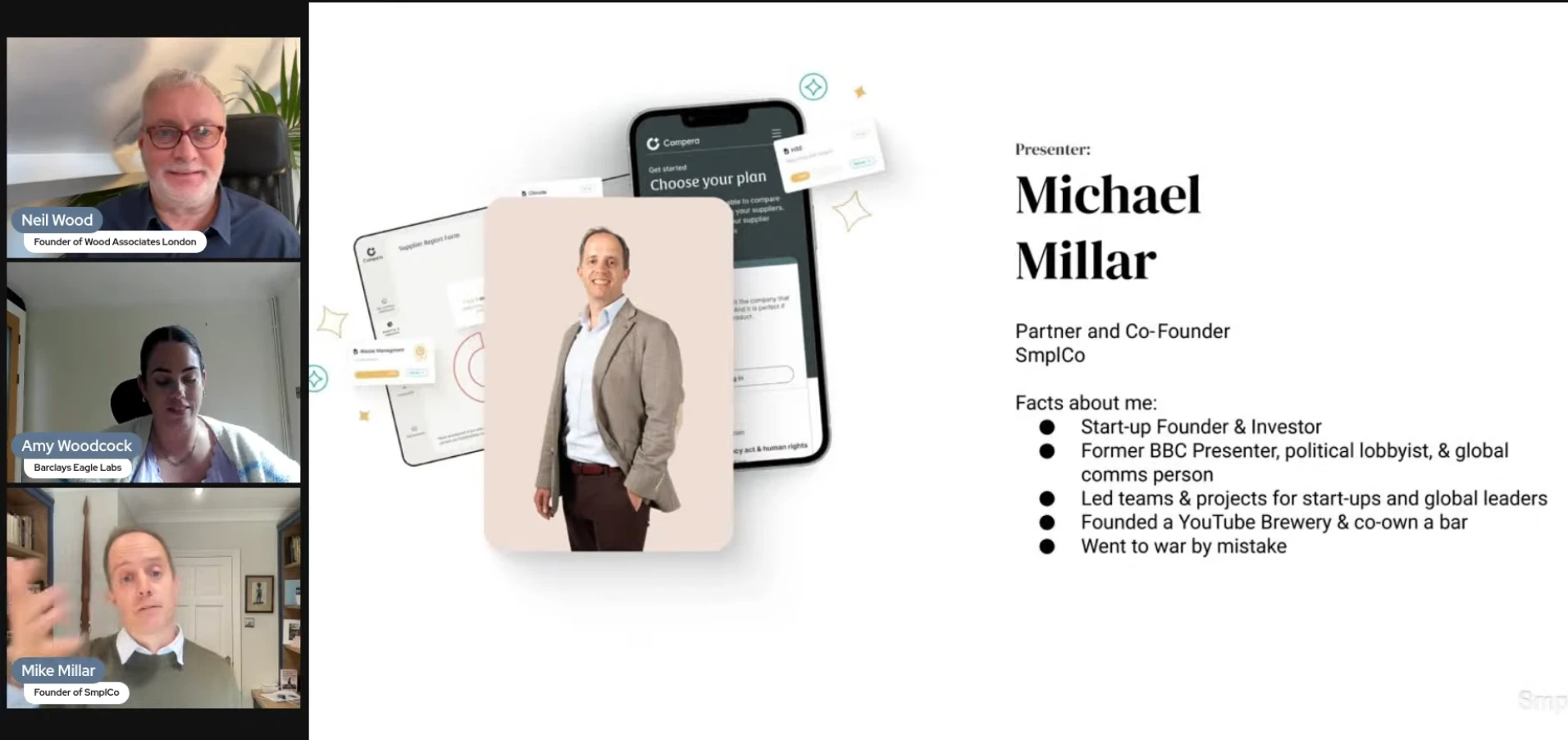
"What's the most common mistake founders make when preparing to fundraise?" Big question. Surprisingly simple answer, as far as I'm concerned. It comes down to two questions ...and they are both the same: "So what?"
Not that my co-presenter on the Barclays Eagle Labs webinar (where this question came up) agreed, of course.
Award-winning corporate financier Neil Wood said the biggest mistake was "not knowing your numbers". Particularly, not knowing what share of your serviceable addressable market you can realistically win.
"Get that wrong," he said, "and it throws off every figure that follows, right through to exit."
My answer was simpler: putting features before benefits. Or to put it another way, not focusing on the question: "So what?"
Features explain what you've built. Benefits explain why it matters.
It's the mistake I see more than any other. And, as it happens, I'd watched it play out for real that very morning.
"This is so cool. But why would anyone buy it?"
I'd spent 90 minutes earlier that day with a brilliant deep-tech founder, playing the role of investor. We were going through their pitch deck, which detailed a`n impressive-sounding data platform.
The opening slide described the product as a 'design engine for early conceptualisation'.
"Wait, let me stop you there," I said. "So what?"
I asked that question another 20 times in the next few minutes. And that's because, no matter how clever the idea, a huge problem remained; I now knew what the thing was, but the deck didn't tell me (...hang on, let me grab my loudhailer):
WHY SHOULD I CARE?
When the founder wrapped up I was left thinking: 'This is cool ....but I have no idea why anyone would want to choose this over their current solution'. The obvious next question is: 'Why then would an investor risk their money on it?'
Here's the trap. Founders tend to be domain and/or technology experts. The "so what" lives in their head and in their heart. The industry-busting importance of their solution is so clear to them that they assume everyone else can see it too.
But benefits are often invisible to they eye of someone who isn't suffering the problems you want to solve. They become even better hidden to the outside viewer when they offer that most priceless of things - a benefit you can't get any where else.
And so they plunge with gleeful abandon into a story complex, shiny widgets, expecting their audience to somehow understand why these features matter.
Nobody cares about your thing as much as you do, as my co-founder Bjorn Ivar is fond of saying. And they won't care until you make them care.
Take a look at my favourite meme:
Why do benefits beat features?
There's nothing new or revolutionary about this. Marketers and psychologists have been making this point for decades. And, don't forget, when you're pitching you've got to be a mixture of the two.
- Harvard Business School's Theodore Levitt popularised the line that people don't want a quarter-inch drill, they want a quarter-inch hole. The point: customers buy outcomes, not tools.
- Neil Rackham's research behind SPIN Selling studied more than 35,000 sales calls. In big-ticket sales, talking up features and advantages did little to win deals. Showing how you meet a buyer's real, stated need did.
- Neuroscientist Antonio Damasio found that people with damage to the brain areas that process emotion struggle to make even simple decisions. Emotion isn't the enemy of a rational choice. It's part of how we make one.
- DocSend's analysis of investor behaviour found investors spent less than four minutes, on average, looking at a pitch deck. You don't have time to make them work out the benefit for themselves.
And in an age when anyone can vibe-code anything, investors are drowning in decks. Grab them by the collar early, or lose them.
How do you turn a feature into a benefit? Ask "so what?", then ask it again
Here's the simplest tool I know for turning a feature into a benefit. Take any claim on any slide and ask: "So what?" Answer it. Then ask "So what?" again.
The first "So what?" usually gets you to the practical problem. The second gets you to the human one: the thing people feel, fear and pay to fix.
Here's roughly how it went with that founder (and I've anonymised this for obvious reasons):
- The feature: A dedicated tool for designing heavy duty mechanical tools.
- So what? Right now, that work is done in spreadsheets and stitched together across a pile of expensive, disconnected tools that were never designed for the job.
- So what? It's slow, costly and stressful. One mistake at bid stage can lose a contract worth millions and damage a firm's reputation.
Now we're talking. That second answer is the one an investor can feel.
This is crucial because what matters to your customers is what drives adoption and revenue. That's what matters to your investor. The real pitch wasn't "we've built a clever engine". It was "we've found a way to change how an entire industry works". That's the moment an investor's money starts paying attention.
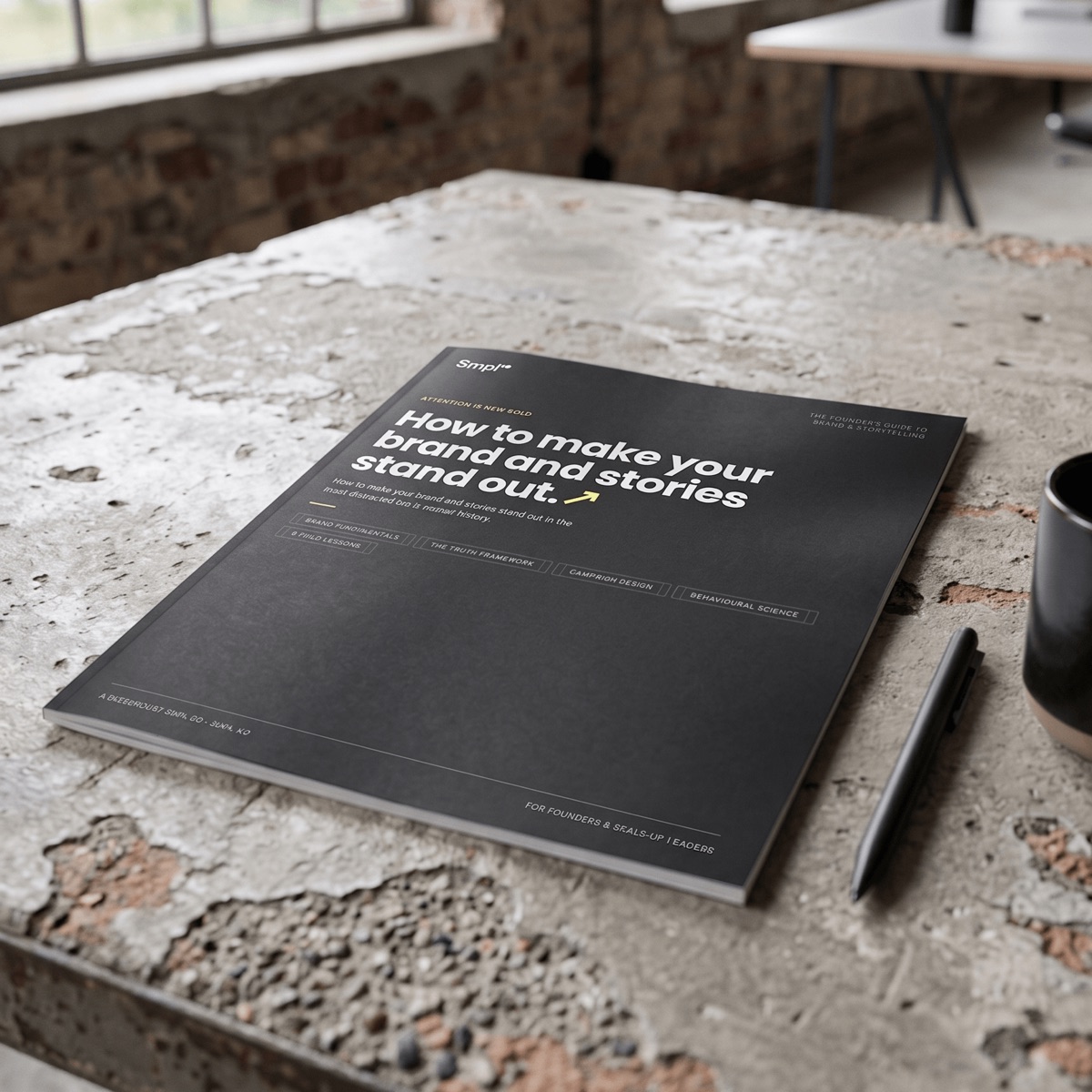
Free guide
Attention is new gold
The founder's guide to brand and storytelling. The TRUTH storytelling framework, 8 behavioural science principles and 6 field lessons to make people care.
How do you put it to work on your deck?
Most decks don't need tearing up. They need "So what?" running all the way through them. Here's how to do that:
- Focus relentlessly on leading with benefits. Features come second, as proof you can deliver.
- Go slide by slide checking. Every time you come across a feature (i.e. a specific aspect of what you're doing rather than the reason you're doing it), flip it. And you do that by asking "So what?" twice. If you can't answer, you'll probably need to rewrite the slide or cut it.
- Try to explain it as you would to a 12-year-old. If the benefit needs jargon to make sense, it isn't clear enough yet. (FYI: this is a rule I was taught as a journalist and it really works. Your answers tend to be clearer, more imaginative and more enthusiastic.)
- Get specific. "Huge problem" means nothing. How big is huge? A mountain is huge. So is a swimming pool. Give the specific cost, time, or risk savings (or whatever benefit your widgets bring).
Watch the webinar
As I mentioned before, I covered all this and more with Neil Wood of Wood Associates in Fundraising season is open: what investors are looking for right now, hosted by Eagle Labs.
We covered the whole investment journey, from preparing your content, to picking the right investors for you, successful pitching, and the mistakes that kill deals. Have a watch:
Two questions. Ask them every time.
"So what?" And then "So what?" again?
They're the two most important questions you can ask yourself before you pitch. Because investors don't care until you make them care.
Benefits first. Features second. Always.
Want a second pair of eyes on your deck? Get in touch. I and my partners at SmplCo have seen A LOT of decks in our time and we've made and pitched plenty ourselves to. We'd be delighted to take a look.

About the author
Michael Millar
Partner & Co-founder, SmplCo
Michael is a partner and co-founder of SmplCo. Before taking on fundraising and go-to-market responsibilities for both SmplCo and our clients, he was a journalist (BBC, Reuters, Spectator), political lobbyist, and global comms leader.
LinkedIn →Keep reading
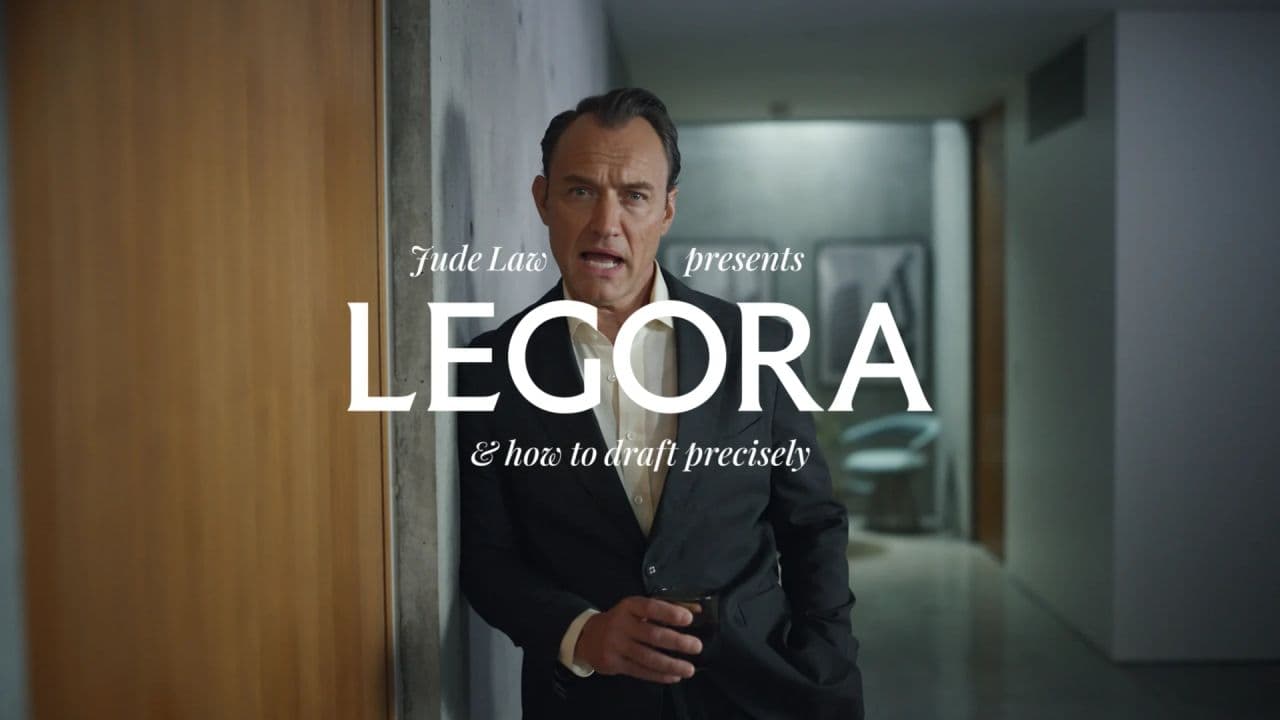
A Legal AI Firm Just Hired Jude Law. Storytelling Is Back As A Must-Have Moat.
A legal AI company just hired Jude Law. In a world where anyone can vibecode a product, storytelling is a crucial moat for you & your tech. Here's why, and how to do it.
Attention Is the New Gold. Here's How Founders Win It.
You do not have an attention problem, you have a relevance problem. What founders get wrong about winning attention, and the frameworks we use to fix it.
Your Brand Is Too Polished. That's the Problem.
A half-chaotic bar in Stavanger built a more distinctive presence than companies with much bigger budgets. Here is why polished is forgettable.